Prescription Drugs in Japan
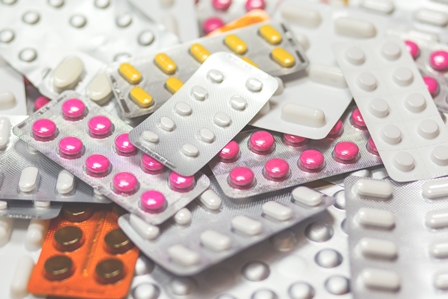
Depending on what country you come from, you may be used to prescription drugs coming in a bottle. In Japan, prescription pills are most commonly dispensed in blister packs like this, though some clinics and hospitals package them in individual paper envelopes (分包) instead.
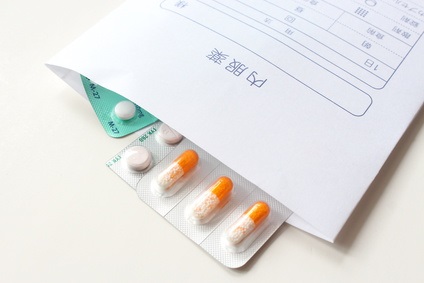
Combination drugs (containing multiple active ingredients in one pill) are less common in Japan, so even if you just have a cold, it is common to get multiple paper bags of medications. Written on the front of each paper bag will be the name of the medication, what type of medication it is (pill, patch, cream, etc.), and how to take it. If you have doubts about drug combinations or want to know if you can take an OTC product with your prescription medications, ask a registered Pharmacist.
Bringing Medication to Japan

In countries like the United States, it is common to receive opioids for everything from wisdom tooth removal to major surgery. In Japan, pain management tends to be more conservative — acetaminophen and NSAIDs such as loxoprofen are the most commonly prescribed options for everyday pain and minor procedures. Stronger medications do exist but are reserved for truly serious situations. It should also be noted that bringing certain opioid or narcotic medications into Japan may be illegal even with a valid prescription, as narcotics are governed by stricter laws. You can submit a Yakkan Shoumei (Import Report of Medication) for many medications, but narcotics may be restricted from entry regardless.
Drugs that cannot be brought into Japan in any amount are:
- Sudafed or any drug containing more than 10% pseudoephedrine
- Vicks brand inhalers
- Amphetamine and methamphetamine (e.g. Adderall)
- Psychotropic drugs containing more than 1.8g of methylphenidate
If you need to bring a prescription with you from your country, you will need to submit a Yakkan Shoumei (薬監証明) to a Customs officer in Japan.
Learn more about importing prescription medications from the MHLW (Ministry of Health, Labour, and Welfare):
https://www.mhlw.go.jp/english/policy/health-medical/pharmaceuticals/01.html
Visit your local Japanese Consulate or Embassy website to find out what documents need to be submitted from your country in order to obtain a Yakkan Shoumei. (Typically, the necessary documents include a description of the medication and its purpose, and an official letter from your doctor stating the necessity of the medication in question. However, documents may vary by country, so be sure to check with your local Japanese Consulate or Embassy.)
Prescription Drug Vocabulary
| Japanese | Romaji | Function |
|---|---|---|
| 薬 (くすり) |
kusuri | medicine |
| 飲み薬 (のみぐすり) |
nomigusuri | pills or liquid medication (medicine taken by mouth) |
| 塗り薬 (ぬりぐすり) |
nurigusuri | ointment or cream medication |
| 貼り薬 (はりぐすり) |
harigusuri | patch medication (transdermal patch) |
| 注射薬 (ちゅうしゃやく) |
chuushayaku | injectable medication (insulin, etc.) |
| 朝食後 (ちょうしょくご) |
choushokugo | after breakfast |
| 昼食後 (ちゅうしょくご) |
chuushokugo | after lunch |
| 夕食後 (ゆうしょくご) |
yuushokugo | after dinner/supper |
| 毎食後 (まいしょくご) |
maishokugo | after each meal (breakfast, lunch, and dinner) |
| 副作用 (ふくさよう) |
fukusayou | side effect |