Going to the Dentist
I think I have a cavity. Now what?
When you make your first appointment, you will have the standard set of x-rays, exam, and cleaning if you elect to have one. The dentist will look at your x-rays and inside your mouth to see if you have any cavities or other problems. If there are any issues, your dentist will point them out to you on your x-rays and request you make an appointment to begin the process.
If you have a cavity, the dentist will ask you what material you'd like to fill it with. It should be noted here that ceramic, gold, and fillings of other materials are NOT covered by your health insurance. If you want a material other than the standard metal filling or composite resin you will have to pay the full cost out of pocket. If your dentist tries to tell you only metal fillings are covered by insurance, it may be best to see a different dentist. Metal and composite resin fillings ARE covered by insurance.
If you choose a metal filling, a dental hygienist will take a mold of your tooth, and will have a filling made. You will have to go back in about a week to have the filling inserted. In Japan, anesthetic is not always administered during the placement of a metal filling, and some patients may experience discomfort depending on the depth of the cavity and the number of exposed nerves. If you are concerned, let your dentist know beforehand.
My dentist wants to do a "root treatment" instead of a root canal.
Many Japanese dentists are hesitant to skip straight to nerve removal when it comes to more serious tooth issues. Your dentist may tell you he/she wants to perform a root treatment. This consists of the dentist drilling through to the problem area, injecting medicine, and packing the tooth with temporary filling until the next treatment. While this can be effective, it often takes a month or more of repeat treatments and leaving your tooth filled only with a temporary filling, which can come loose easily.
If you do not have the time to do this or simply would like to skip to a quick treatment you are used to/familiar with, there are dentists who will perform a root canal for you. Sometimes all it takes is asking, but you are more likely to find dentists with more modern treatments, facilities, and methods in the city. It may be worth finding a city dentist for anything other than checkups and cleanings, depending on your personal preference.
I have to have a tooth pulled.
Even today, with all the treatment options available, sometimes teeth need to be pulled. Whether from disease or injury, or just getting your wisdom teeth out, if you need to have a tooth pulled, it can be a scary process. However, in the event you need an extraction, you can rest assured that the pulling itself will be painless.
First, your dentist will take a detailed x-ray of your tooth to see its exact placement, depth, and proximity to cranial nerves. Before having a tooth pulled, you will, of course, be given an anesthetic. The anesthetic for tooth extraction is given much deeper than typical dental anesthesia, so this part can be fairly painful. The pain will end almost immediately after the injection is finished. How long an extraction takes depends on how firmly in the jaw the tooth in question is, and whether the tooth's shape allows the dentist to grasp it easily with his/her tools. If you experience any pain during the extraction, tell your dentist and he/she will give you more anesthetic.
After your extraction, the dentist will pack your open wound with gauze, and will give you more gauze that you will use to change the dressing on your own, per the dentist's instructions. Your dentist will give you a prescription for a mild pain reliever and send you on your way.
Dentistry Vocabulary
| Japanese | Romaji | English | Pronunciation |
|---|---|---|---|
| 予約 (よやく) |
yoyaku | appointment | |
| 歯医者 (はいしゃ) |
haisha | dentist | |
| 診察 (しんさつ) |
shinsatsu | exam | |
| レントゲン / エックス線 | rentogen / ekkususen | x-ray | |
| クリーニング | kuriiningu | cleaning | |
| 虫歯 (むしば) |
mushiba | cavity | |
| インレー / 詰め物 | inree / tsumemono | filling | |
| クラウン / かぶせ物 | kuraun / kabusemono | crown | |
| 根の治療 (ねのちりょう) |
ne no chiryou | root treatment | |
| 神経を取る (しんけいをとる) |
shinkei wo toru | root canal | |
| 麻酔 (ますい) |
masui | anesthesia | |
| 銀歯 (ぎんば) |
ginba | metal filling/crown | |
| コンポジットレジンインレー・クラウン | konpojittorejin inree / kuraun | composite resin filling/crown | |
| セラミックインレー・クラウン | seramikku inree / kuraun | ceramic filling/crown | |
| ゴールドインレー・クラウン | goorudo inree / kuraun | gold filling/crown | |
| 抜歯 (ばっし) |
basshi | tooth extraction | |
| 痛い (いたい) |
itai | it hurts |
Orthodontia
Orthodontia in Japan, like in many other countries, is not covered by insurance. There are several types of braces available in Japan.
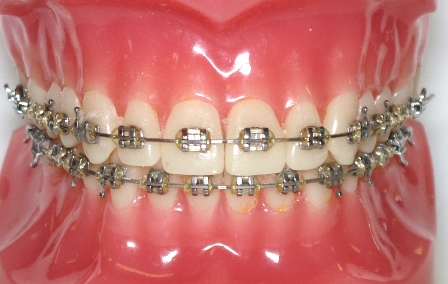
Wire bracket braces
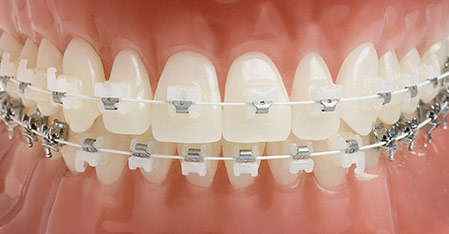
Ceramic braces
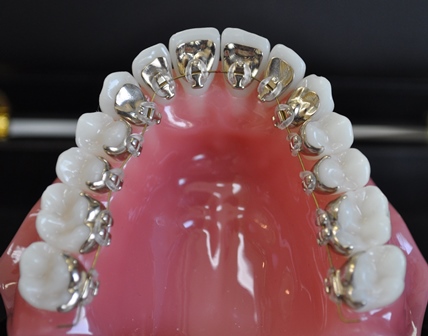
Lingual braces
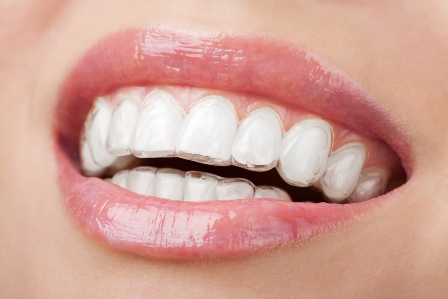
Invisalign
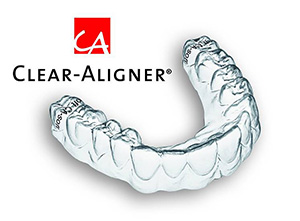
Clear-Aligner
If you don't live in an area that has a dedicated orthodontist's office, many regular dentists' offices have an orthodontist come in once a week. The cost of braces in Japan varies depending on the type of braces you choose, the length of the treatment, and whether they are child or adult braces.
Orthodontia Vocabulary
| Japanese | Romaji | English | Pronunciation |
|---|---|---|---|
| 矯正 (きょうせい) |
kyousei | braces / orthodontia | |
| 唇側矯正 (しんそくきょうせい) |
shinsokukyousei | braces on the lip-side of teeth (metal bracket / ceramic brace) | |
| 舌側矯正 (ぜっそくきょうせい) |
zessokukyousei | lingual braces | |
| インビザライン | inbizarain | Invisalign | |
| クリアアライナー | kuria arainaa | Clear-Aligner | |
| 調整 (ちょうせい) |
chousei | adjustment | |
| ゴムバンド | gomubando | rubber band |