The insurance card you may be looking for no longer exists
If you have been in Japan a few years, you will remember a paper or plastic health insurance card. That card is gone. Japan stopped issuing it on 2 December 2024, and every remaining one expired on 1 December 2025.
For a while, clinics still accepted an expired card from patients who had not noticed. That grace period ended on 31 July 2026.
What you show at the desk now is one of two things.
- Your My Number Card, if you have registered it for insurance use. Registered, it is called a マイナ保険証 (maina hokenshou). You tap it on the reader yourself.
- A 資格確認書 (shikaku kakuninsho), if you have not. Your insurer sends it to you free of charge, and you do not have to apply for it.

Source: Ministry of Internal Affairs and Communications, soumu.go.jp/kojinbango_card/03.html
If you are using the card, the reader itself is where people get stuck. It sits on the counter, and you operate it yourself rather than handing anything over. These are the ministry's own instructions for patients.

Source: Ministry of Health, Labour and Welfare, mhlw.go.jp/stf/index_16745.html

Step 3 is the one nobody warns you about. The reader asks whether this clinic may see your past records. Both screens give you two buttons, and the wording is Japanese only.
同意しない do not consent
Source: Ministry of Health, Labour and Welfare, オンライン資格確認に関する周知素材 — the general version of the reader guide, and the patient instructions for the reader. Set out in English here; the ministry's own materials are in Japanese.
A 資格確認書 does not have one fixed appearance. The ministry states plainly that the form and the format differ from insurer to insurer, and that its validity is set by the insurer at up to five years. It may reach you as a card, or as something closer to a postcard.
資格確認書
Either way, look for the characters 資格確認書 on it. That is the word the reception desk will ask for, and it is what tells you this piece of paper or plastic is the thing that gets you seen.
The two shapes, and that the form differs by insurer, are from the Ministry of Health, Labour and Welfare, 資格確認書について. Drawn here in English; the ministry's own illustration is labelled in Japanese.
You do not need both. If you have registered your card, you will also have been sent a slip called a 資格情報のお知らせ (shikaku jouhou no oshirase). That slip is not a card and will not get you seen on its own — you show it alongside your My Number Card if the reader cannot confirm your cover.
Registering the card is worth doing for one reason in particular, and it is explained under the High Cost Medical Care Benefit System further down: it caps what you pay for expensive treatment at the hospital desk, with no application and no certificate.
The National Health Insurance System (NHIS)
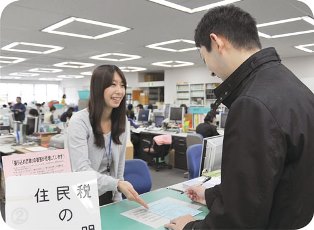
Japan's national health insurance system
Japan's national health insurance system is a socialized system in which all residents and citizens of Japan are entitled to affordable healthcare. In Japan, healthcare is a right, not a privilege.
The National Health Insurance System (NHIS) is one of the social security systems of Japan. Those who are enrolled in the NHIS have a portion of their medical expenses paid in the event of illness, injury, childbirth, and death.
The health insurance system in Japan is "Insurance for All". What decides whether it applies to you is having an address in Japan — being on the resident register — not your nationality or your age. The ministry's wording is that anyone with an address in Japan is insured under the NHIS unless they fall into one of a short list of exceptions, and short-stay residents are one of those exceptions. Everyone else is required to be on some form of health insurance, whether the NHIS, an employer's scheme, or another programme.
However, some people are excluded from it by law. Article 6 of the National Health Insurance Act sets out eleven categories. In plain terms, you are not on the NHIS if you are:
- Insured under the Health Insurance Act through an employer — or a dependent of somebody who is
- Insured under the Seamen's Insurance Act — or a dependent of somebody who is
- A member of a mutual aid association for national government employees or for local government employees — or a dependent of one
- In the mutual aid scheme for private school teachers and staff
- Covered by the Act on Assurance of Medical Care for Elderly People, which is the scheme people move to at 75
- In a household receiving public assistance, unless that assistance is suspended
- Insured through a National Health Insurance Association — a 国民健康保険組合, run for a particular trade
- A day labourer holding the special insurance booklet under the Health Insurance Act, or a dependent of one
Categories 3 and 4 catch more foreign residents than people expect. If you teach or research at a national or public university, or work at a private school, you are very likely on a 共済組合 (kyousai kumiai) — a mutual aid association — rather than on either the NHIS or ordinary employer insurance.
The Act closes with a further category for people excluded for other special reasons set by ministerial ordinance. If you are self-employed, have nobody working for you, and are in none of the above, enrollment in the NHIS is mandatory.
Part-time work is where this gets decided, and the rule has been moving. There is no single number of hours that puts you on the NHIS rather than your employer's scheme. It now turns on your hours, the size of the company, and your monthly pay together — and the thresholds are being widened in stages, with further changes scheduled through the 2030s. If you work part-time, do not assume from an older guide which side of the line you are on. The ministry keeps a dedicated site for this at mhlw.go.jp/tekiyoukakudai, and your employer can tell you which scheme they have put you on.
NHIS Enrollment Requirements
NHIS enrollment requires that certain conditions be met. The following are situations in which a person must enroll in the NHIS.
- When you quit, retire, are laid off, or are dismissed from your job. (see further detail below)
- If you end your membership with the National Health Insurance Union
- If you are a dependent of a person who meets the criteria of 1 and 2.
- When you no longer receive welfare benefits
- When you have a baby and you are yourself on the NHIS, your newborn goes on it too. If at least one parent is enrolled in insurance through their employer, however, the newborn goes on that parent's insurance.
*Note about 1.
If you quit, retire, are laid off, or are dismissed from your job you are entitled to keep your employer's insurance for up to 2 years, paying the premium yourself. This is called 任意継続 (nini keizoku), voluntary continuation. If you choose not to stay on it, you are required to join the NHIS.
You are not locked in for the full two years. The Japan Health Insurance Association lists, among the things that end this cover, the case where you have applied to say you no longer wish to be a voluntarily continuing insured person. So if you take it and later want to move to the NHIS instead, you can ask to leave.
What the insurance does not pay for
Article 36 of the Act defines the benefit narrowly: it is for illness and injury. Consultation, medicines, procedures and surgery, nursing at home, and admission to hospital. That definition is what puts the following outside it, because none of them is the treatment of an illness or an injury:
- An annual health check
- Vaccinations
- Cosmetic surgery
- Orthodontic work
- An uncomplicated birth — for which there is the lump sum described below instead
The same article excludes the food and the living arrangements during a hospital stay from the treatment benefit, which is why those are billed separately.
Then there are cases where treatment is genuinely for an illness or injury, but something else applies:
- You caused it deliberately, or through your own criminal act. Article 60: the benefit is not paid. There is no discretion in it.
- Fighting, drunkenness, or seriously disorderly conduct. Article 61 is worded differently — the insurer may withhold the benefit in whole or in part. It is a power, not an automatic bar.
- Injury or illness from your work. Article 56: where workers' accident compensation insurance or an equivalent scheme covers it, the NHIS does not pay. This is not a gap; it is the other scheme's job.
- Somebody else caused it — a road accident, for instance. This one is often misunderstood. The insurance does pay. Article 64 then gives your insurer the right to recover what it paid from the person responsible, and provides that if you have already been compensated by that person for the same thing, the insurer is released to that extent.
Childbirth is not covered, but there is a lump sum
Whichever public insurance you are on pays a lump sum of ¥500,000 per child, called the 出産育児一時金 (shussan ikuji ichijikin). It went up from ¥420,000 in April 2023, the first rise in thirteen years.
Two conditions: you were on Japanese public health insurance when you gave birth, and the birth was at or after 4 months of pregnancy, which the ministry counts as 85 days.
You will usually never handle the money. Under the 直接支払制度 (chokusetsu shiharai seido), the hospital claims it from your insurer and it goes straight to them, so you settle only the difference — or receive the remainder, if the birth cost less than the lump sum. Some smaller clinics use the 受取代理制度 (uketori dairi seido) instead, where you file the claim and the clinic collects on your behalf. The hospital will tell you which one it runs; it is worth asking early rather than at the desk afterwards.
A funeral payment, and sick pay that may not exist
Article 58 puts the childbirth lump sum and a funeral payment, the 葬祭費 (sousaihi), in the same sentence: for a birth or a death, your city or association makes the payment as provided by its own ordinance. So the funeral payment exists everywhere, but how much it is depends on where you live, and we do not publish figures that change from one city to the next. Ask yours, or look at its website.
The second paragraph of the same article is the one to know about. Beyond those payments, a city or association may also provide sick pay — the 傷病手当金 (shoubyou teatekin) — and other benefits, again by its own ordinance. May, not shall — the Act uses the permissive wording here and the obligatory wording for the birth and funeral payments. So sick pay on the NHIS is not something the law guarantees you; whether there is any, and on what terms, is your city's decision. Your city office can tell you what it does.
NHIS Enrollment Procedures
National Health Insurance procedures are administered by your municipal office.
When you join, when you leave, and when your circumstances change, you have 14 days to go to the National Health Insurance desk at your city office.
There is no national checklist of what to bring. The Ministry of Health, Labour and Welfare is explicit that the documents and the way you apply are set by your prefecture, your city, or your insurance association, and says to check theirs. So call your own city office, or look at its website, before you go.
What is worth knowing in advance is the name of the document that proves your situation, because that is the thing you have to ask a former employer or another office for, and it is the word the counter will use. The table below gives those names.
| Why you are enrolling | The document that shows it |
|---|---|
| You quit, retired, or were laid off or dismissed |
健康(けんこう)保険(ほけん)の資格(しかく)喪失(そうしつ)証明書(しょうめいしょ) (kenkouhoken no shikaku soushitsu shoumeisho) Certificate of Health Insurance Coverage Loss OR 退職(たいしょく)証明書(しょうめいしょ) (taishoku shoumeisho) Certificate of Retirement OR 離職票(りしょくひょう) (rishokuhyou) Notice of Separation |
| Your cover from a previous employer has run out, having chosen to keep it on after leaving |
任意(にんい)継続(けいぞく)保険(ほけん)資格(しかく)喪失(そうしつ)証明書(しょうめいしょ) (nini keizoku hoken shikaku soushitsu shoumeisho) Loss of Optional Continuance of Insurance Coverage Certificate |
| You have stopped receiving public assistance |
保護(ほご)廃止(はいし)決定(けってい)通知書(つうちしょ) (hogo haishi kettei tsuuchisho) Notification of End of Public Assistance |
| You are a foreign resident |
在留(ざいりゅう)カード (zairyuu kaado) Resident Card OR 特別(とくべつ)永住者(えいじゅうしゃ)証明書(しょうめいしょ) (tokubetsu eijuusha shoumeisho) Special Permanent Resident Certificate |
| You have moved to a new city, or you are applying on behalf of a newborn | Nothing beyond what your city office asks for. Ask them. |
One thing you will not be asked for: a personal seal. Older guides still list an 印鑑 (inkan) for these procedures. A ministerial ordinance of 25 December 2020 took the seal boxes off the forms.
When you unenroll from the NHIS
| Why you are leaving | The document that shows it |
|---|---|
| You are moving out of your city | Handled as part of your move-out notification at the city office. |
| You are moving to your employer's insurance | Whatever your new insurer has issued you — your 資格確認書 (shikaku kakuninsho), or the 資格情報のお知らせ (shikaku jouhou no oshirase) slip if you have registered a My Number Card. |
| You have started receiving public assistance |
保護(ほご)開始(かいし)決定(けってい)通知書(つうちしょ) (hogo kaishi kettei tsuuchisho) Notification of Start of Public Assistance |
| A death in the household — next of kin carry this out | Ask the city office. What they need depends on the household. |
Other situations in which you will need to perform procedures regarding your NHIS enrollment
| Circumstance | The document that shows it |
|---|---|
| You have moved within the same city | Handled as part of your change-of-address notification. |
| The name on a deed or a lease has changed | Ask the city office which proof they want. |
| You are moving out of your city to study |
在学(ざいがく)証明書(しょうめいしょ) (zaigaku shoumeisho) Certificate of Student Registration AND 転出先(てんしゅつさき)の住民票(じゅうみんひょう) (tenshutsusaki no juuminhyou) Residence record at the address you are moving to |
| Your 資格確認書 is lost, damaged, or dirty |
顔(かお)写真付き(しゃしんつき)の公的(こうてき)身分(みぶん)証明書(しょうめいしょ) (kaoshashin tsuki no kouteki mibun shoumeisho) Photo ID issued by a government authority — driving licence, passport, Resident Card |
| Japanese | Romaji | English | Pronunciation |
|---|---|---|---|
| マイナ保険証 (マイナほけんしょう) |
maina hokenshou | A My Number Card that has been registered for use as an insurance card | — |
| 資格確認書 (しかくかくにんしょ) |
shikaku kakuninsho | What your insurer sends you instead, if you have not registered a My Number Card. This is what you show at the desk. | — |
| 資格情報のお知らせ (しかくじょうほうのおしらせ) |
shikaku jouhou no oshirase | A slip sent to people who have registered. Not valid on its own — shown alongside the My Number Card. | — |
| 限度額適用認定証 (げんどがくてきようにんていしょう) |
gendogaku tekiyou ninteishou | The certificate that caps an expensive bill at the counter. Not needed if you use a My Number Card. | — |
| 出産育児一時金 (しゅっさんいくじいちじきん) |
shussan ikuji ichijikin | The ¥500,000 lump sum paid for each child born | — |
| 身分証明書 (みぶんしょうめいしょ) |
mibunshoumeisho | Personal identification | |
| 住民票 (じゅうみんひょう) |
juuminhyou | Residence Record | |
| 本人確認 (ほんにんかくにん) |
honninkakunin | Document that confirms you are who you say you are (identification) | |
| 手続き (てつづき) |
tetsuzuki | Paperwork, procedure | |
| 住所変更 (じゅうしょへんこう) |
juushohenkou | Change of address | |
| 委任状 (いにんじょう) |
ininjou | Power of attorney (a document giving someone legal permission to fill out paperwork, etc. on your behalf) | |
| 転入 (てんにゅう) |
tennyuu | Moving into a city | |
| 転出 (てんしゅつ) |
tenshutsu | Moving out of a city | |
| 在学証明書 (ざいがくしょうめいしょ) |
zaigakushoumeisho | Certificate of Student Registration | |
| 在留カード (ざいりゅうかーど) |
zairyuukaado | Resident Card |
How to Pay for your National Health Insurance
The NHIS bills by household, not by person. Article 76 of the Act requires the city to collect from the head of the household that an insured person belongs to, provided that person has an address in the city. So one bill arrives, covering everyone in the household who is on the NHIS.
Your bill may not say 保険料. The same article ends with an exception: where the municipality levies this under the Local Tax Act instead, it is a 国民健康保険税 (kokumin kenkou hoken zei), a tax, rather than a 保険料 (hokenryou), a premium. It pays for the same cover either way. Which of the two words appears on your paperwork depends on the city, which is why two people can describe the same bill differently.
Payment periods vary by municipality, so please check with your city office. The accepted payment methods are:
- Direct debit from a bank account (口座振替, kouzafurikae)
- Paying the slip that is posted to you, at a convenience store or a bank
Beyond those two, what your city accepts — smartphone payment apps, credit cards, paying online — is decided by the city and changes from time to time. The slip that arrives in the post lists the methods that are valid for it. If you would rather not think about it again, ask about direct debit when you enrol.
| Japanese | Romaji | English | Pronunciation |
|---|---|---|---|
| 納付 (のうふ) |
noufu | To make a payment | |
| 納付期間 (のうふきかん) |
noufukikan | Payment period | |
| 世帯主 (せたいぬし) |
setainushi | Head of household (usually the name on the deed or lease) | |
| 郵送 (ゆうそう) |
yuusou | Send through the mail | |
| 口座振替 (こうざふりかえ) |
kouzafurikae | Direct payment from bank account | |
| 保険料 (ほけんりょう) |
hokenryou | Insurance fee |
High Cost Medical Care Benefit System
The High Cost Medical Care Benefit System puts a cap on what a household pays for treatment in one calendar month, from the 1st to the last day. Anything above the cap comes back to you. Foreign residents are covered by it on the same terms as anyone else.
If you use your My Number Card as your insurance card, the cap is applied at the hospital desk and there is no paperwork at all. The Ministry of Health, Labour and Welfare puts it plainly: use the card and you do not have to pay above the cap, even without the certificate that used to be required. If you do not use the card, you apply — either before treatment or afterwards, both of which are described below.
The cap depends on your income and your age. It covers treatment and prescription medicines. It does not cover over-the-counter medicines, and it does not cover food, your bed, or other non-medical charges during a hospital stay.
The figures below are for people under 70. They changed in August 2026, and they are due to change again in August 2027, when the income bands are split more finely.
| Annual income, roughly | Cap for one month | From the 4th month | Cap for the year |
|---|---|---|---|
| ¥11,600,000 and over | ¥270,300 + 1% | ¥140,100 | ¥1,680,000 |
| ¥7,700,000 ~ ¥11,600,000 | ¥179,100 + 1% | ¥93,000 | ¥1,110,000 |
| ¥3,700,000 ~ ¥7,700,000 | ¥85,800 + 1% | ¥44,400 | ¥530,000 |
| Under ¥3,700,000 | ¥61,500 | ¥44,400 | ¥530,000 |
| Exempt from resident tax | ¥36,900 | ¥24,600 | ¥290,000 |
The 1%: in the top three bands a further 1% of the treatment cost above a set amount is added to the cap. The Ministry of Health, Labour and Welfare sets that amount for each band.
From the 4th month: if the benefit has already been paid to you three times in the previous twelve months, the cap drops to the figure in that column from the fourth month onward. In Japanese this is 多数回該当, tasuukai gaitou.
Cap for the year: this is new in August 2026. Once what you have paid across the year reaches it, your insurer refunds the rest. The year runs from August to the following July.
Note: the grouping of the income bands above follows the Ministry's own reference table. The bands are set by your 標準報酬月額 (standard monthly remuneration), not by your annual income directly, and the yen figures are the Ministry's own approximations.
If you are 70 or over
Two things change at 70. The caps come down at the lower income levels, and a second, much lower cap appears that applies to outpatient care counted on its own — visits to a clinic, without a hospital stay. In Japanese that one is the 外来特例 (gairai tokurei), the outpatient special provision. It does not exist for anyone under 70.
| Your situation | Cap for one month | Outpatient care alone | Cap for the year |
|---|---|---|---|
| Income roughly ¥2,000,000 ~ ¥3,700,000 | ¥61,500 ¥44,400 from the 4th month |
¥22,000 ¥216,000 across the year |
¥530,000 |
| Exempt from resident tax | ¥25,700 ¥24,600 from the 4th month |
¥11,000 ¥96,000 across the year |
¥290,000 |
| Exempt, and income below a further set level | ¥15,700 | ¥8,000 | ¥180,000 |
Above roughly ¥3,700,000 a year, someone aged 70 or over is on the same monthly figures as the table further up, and there is no separate outpatient cap.
The outpatient cap is the part worth knowing if you are helping an older parent. Somebody going to a clinic every month, and never staying overnight, is measured against ¥22,000 or ¥11,000 or ¥8,000 — not against the monthly figure in the first column.
Applying Preemptively
Read this part only if you are not using a My Number Card at the hospital desk. If you are, the cap is already being applied and there is nothing to arrange.
Otherwise, if you know in advance that you face an expensive treatment — surgery, a hospital stay — you can ask for a certificate that caps the bill at the counter, so that you are not out of pocket while you wait for a refund. In Japanese it is the 限度額適用認定証 (gendogaku tekiyou ninteishou). Apply as early as you can, so that it is in your hands before the treatment.
You get the form from whoever insures you, and it is not the same office for everyone. If you are on National Health Insurance it is your city office. If you are insured through your employer it is either the Japan Health Insurance Association (協会けんぽ) or your company's own health insurance society (健康保険組合). Your card or your Shikaku Kakuninsho says which one you are on.
Note: this caps what you pay for treatment. During a hospital stay, food, your bed and other non-medical charges are not covered by it.
Once you have the certificate, give it to the hospital before the treatment so that the bill is capped when it is issued.
Applying Retroactively
You can apply to be reimbursed for what you paid above the monthly cap. How long the money then takes to arrive is not set nationally, and we have not found an official figure for it — whoever insures you can tell you, and it is worth asking if you are counting on the refund by a particular date.
You have two years. Article 110 of the National Health Insurance Act says that the right to receive a benefit lapses two years after the point at which it could have been claimed. So if you paid a large medical bill within the last two years and never used this system, you can still claim, as long as you have the receipts. After two years the right is gone.
The claim form comes from whoever insures you — your city office, the Japan Health Insurance Association, or your company's health insurance society. There is no English version, so bring someone who reads Japanese if you can.
Preparing to mail your application
Please check with your City Office about where to send your application form, as it varies by municipality.
Get the application form from whoever insures you, or from the hospital. The following are the things that generally go in the envelope with the filled-out form, though your own insurer's instructions come first.
- A photocopy of both sides of your My Number Card.
If you do NOT have a My Number Card, you need the following two things:- A photocopy of your My Number Notification Card OR your Residence Record (original) with your My Number recorded on it.
- A photocopy of your photo ID (passport, driver's license, Resident Card, or other photo ID issued by a governmental authority)
- Any applicable receipts for medical costs (if you are applying RETROACTIVELY)
- A photocopy of your 資格確認書 (shikaku kakuninsho), or of the 資格情報のお知らせ (shikaku jouhou no oshirase) slip if you use a My Number Card
Applying in Person
If you apply in person, please bring the following things with you to your City Office:
- Your 資格確認書 (shikaku kakuninsho), or your My Number Card if you have registered it
- Any applicable receipts (if you are applying retroactively)
- Your bank book (if you are applying retroactively)
- Photo ID (passport, driver's license, Resident Card, or other photo ID issued by a governmental authority)
Again: this is the general shape of it, not a list your city has published. Ring them before you go.
Conditions of the High Cost Medical Care Benefit System
- Your reimbursement is calculated per calendar month, from the 1st day of the month to the last day of it. A treatment that straddles the end of a month is split across two of them.
- Under 70, amounts are added together only where what you paid at one medical institution came to ¥21,000 or more in that month. Note that this is what came out of your own pocket, not the full cost of the treatment.
So if you paid ¥20,000 at one hospital and ¥1,000 at a dental clinic in April, neither counts, and nothing is added up. If you paid ¥21,000 at the hospital, that amount counts. - The split is not by clinical department. At one institution, medical inpatient, medical outpatient, dental inpatient and dental outpatient are each counted separately — so seeing two different doctors at the same hospital as an outpatient counts as one, but the dental clinic upstairs counts as another.
- When you are hospitalized or have to stay in the hospital for surgery or other treatment, the cost of the room, bedding, meals, towels, gowns, etc. are not covered under the High Cost Medical Care Benefit System.
- On the NHIS, the money is transferred to the head of household's bank account, since that is the person the insurance treats as receiving the benefit.
- Arrears do not disqualify you, but they can hold the money up. Article 63-2 of the National Health Insurance Act provides that where a household is behind on premiums and still does not pay after the city or the association has prompted them to, payment of benefits — in whole or in part — is suspended. There is an exception written into the Act for a disaster or another special circumstance set by government order. What the Act describes is a suspension of payment, not a loss of entitlement. Where a payment has been suspended and the premiums remain unpaid, the arrears can be deducted from the suspended amount, after notice.
| Japanese | Romaji | English | Pronunciation |
|---|---|---|---|
| 高額療養費制度 (こうがくりょうようひせいど) |
kougaku ryouyouhi seido | High Cost Medical Care Benefit System | |
| 医療費 (いりょうひ) |
iryouhi | medical expense / treatment cost | |
| 病院 (びょういん) |
byouin | hospital | |
| 入院 (にゅういん) |
nyuuin | Hospitalization, in the hospital | |
| 退院 (たいいん) |
taiin | discharged (from hospitalization) | |
| 食事代 (しょくじだい) |
shokujidai | cost of meals | |
| 所得 (しょとく) |
shotoku | income | |
| 自己負担限度額 (じこふたんげんどがく) |
jikofutangendogaku | out-of-pocket expense upper limit | |
| 計算 (けいさん) |
keisan | calculation |
Sources
Everything above about the card and the cost cap comes from the following. All of them are in Japanese.
- Ministry of Health, Labour and Welfare, 資格確認方法について — mhlw.go.jp/stf/newpage_50657.html (the old card's expiry, the end of the grace period, and what the 資格確認書 and 資格情報のお知らせ are)
- Ministry of Health, Labour and Welfare, 資格確認書について — mhlw.go.jp/stf/newpage_45470.html (that the form differs by insurer, the five-year limit on its validity, and the illustration of the two shapes)
- Ministry of Internal Affairs and Communications, マイナンバーカード — soumu.go.jp/kojinbango_card/03.html (the card specimen, and what is printed on each side)
- Ministry of Health, Labour and Welfare, オンライン資格確認に関する周知素材 — mhlw.go.jp/stf/index_16745.html (the reception leaflet, and the instructions for using the card reader)
- Ministry of Health, Labour and Welfare, マイナ保険証のメリット — mhlw.go.jp/stf/newpage_22682.html (the cost cap applying without a certificate)
- Ministry of Health, Labour and Welfare, 高額療養費制度を利用される皆さまへ — mhlw.go.jp, and its reference table 高額療養費制度の見直しについて — PDF (the August 2026 figures, the fourth-month reduction, and the annual cap)
- Ministry of Health, Labour and Welfare, 国民健康保険の加入・脱退について — mhlw.go.jp/stf/newpage_21539.html (the 14-day deadline, and that the documents are set by your own municipality)
- Ministry of Health, Labour and Welfare, 出産育児一時金等について — mhlw.go.jp (the ¥500,000 lump sum, the two conditions, and the two ways it is paid)
- Japan Health Insurance Association, 任意継続被保険者の資格喪失について — kyoukaikenpo.or.jp (that you can apply to end voluntary continuation)
- Japan Health Insurance Association, 高額療養費 — kyoukaikenpo.or.jp (that the cap runs by calendar month, the ¥21,000 threshold being what you paid yourself, and the inpatient/outpatient and medical/dental split)
- Ministry of Health, Labour and Welfare, 社会保険適用拡大特設サイト — mhlw.go.jp/tekiyoukakudai (the part-time thresholds and the staged widening)
- 国民健康保険法 (National Health Insurance Act) — laws.e-gov.go.jp. Article 6 for who is excluded from the NHIS; article 36 for what the treatment benefit covers; articles 56, 60, 61 and 64 for work injuries, deliberate acts, fighting and drunkenness, and injuries caused by somebody else; article 58 for the childbirth and funeral payments and for sick pay being discretionary; article 63-2 for arrears suspending payment rather than cancelling entitlement; article 76 for billing the head of the household, and for premium versus tax; and article 110 for the two-year limit on claiming.
This page was last checked against those sources on 7 August 2026.