Addressing Postcards and Envelopes
Writing an address in Japanese can be tedious at best, and end disastrously at worst. We have compiled an easy-to-follow guide to help you.
Postcards
First, let's go over postcards. There are two general types. Standard blank postcards can be purchased at any convenience store or stationery store. You can also purchase proprietary cardstock to print your own postcards.
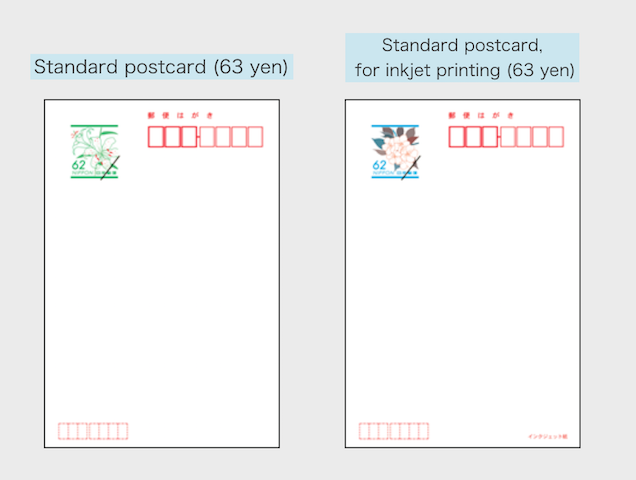
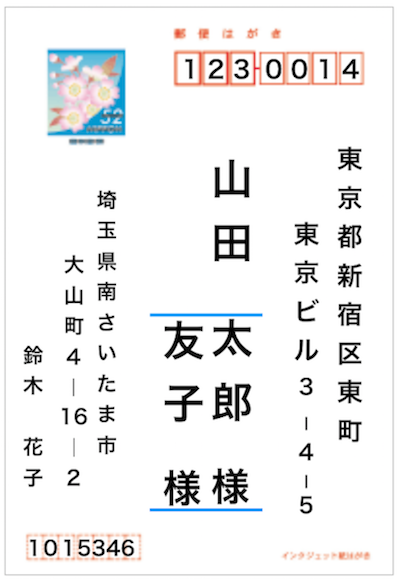
Whether you purchase or print your postcard, you will have to address it at some point. Here is an example of what that will look like:
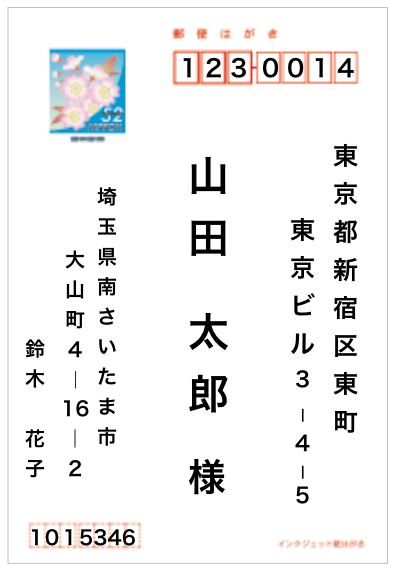
To the untrained eye, this is just a mess of disorganized kanji characters in a puzzle-like configuration. The following image and explanations will help you make sense of how addressing should be done.
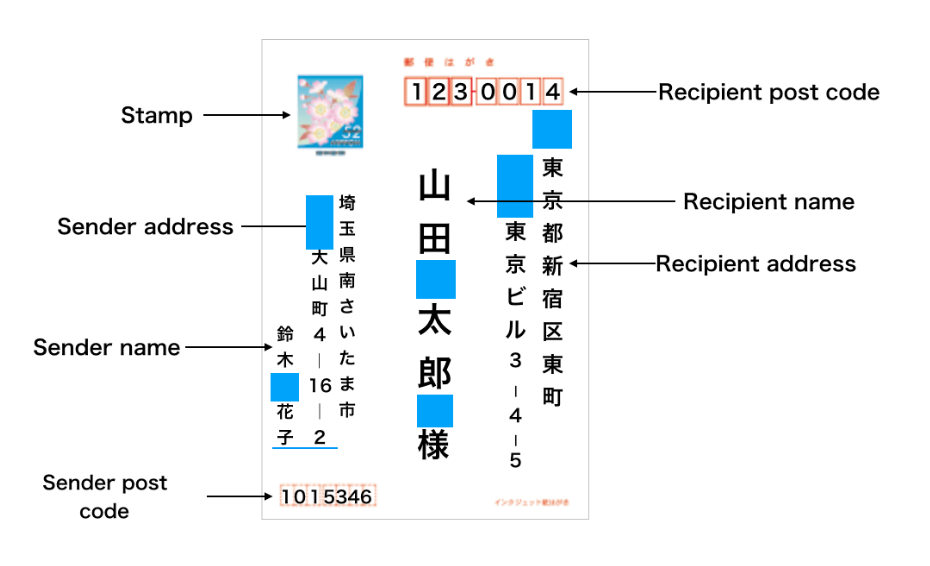
- When writing the recipient address, leave about one character's worth of space between the post code and the first character of the address. If the address is too long, you can extend it to a second line. Be sure to indent two characters' worth of space on the second line.
- When writing the recipient's name, the character size should be roughly double the size of the address characters. Finally, leave a space between the end of the name and 様.
- The characters in the sender's name and address should be the same size, however, spacing rules still apply. When indenting a long address, leave two characters' worth of space on the indented line, and leave a space between the first and last names. The end of the name should also be in line with the end of the address.
In the event you have to address an envelope to more than one person, it should be formatted as below:
The given names should start at the same level, and the 様 should end at the same level, even if the given names are of different lengths.
Envelopes
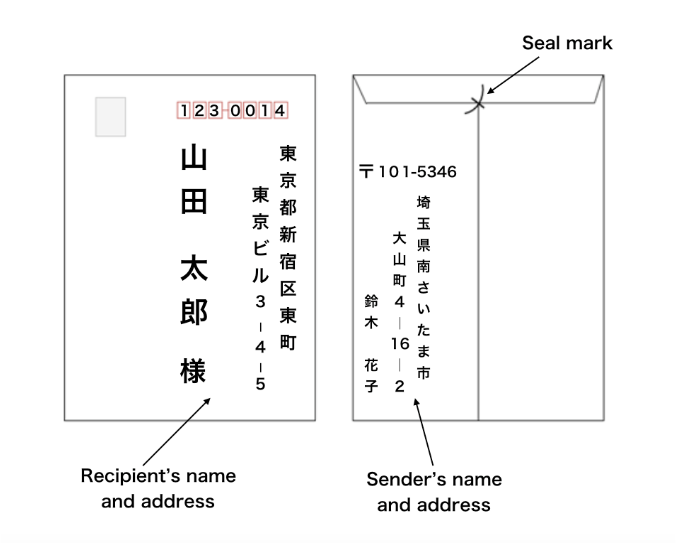
When addressing an envelope, the rules for the recipient's name and address are the same as above. The sender's name and address, however, should go on the back of the envelope. Finally, a simple X (or 〆) mark should be drawn over the sealed envelope flap to assure the recipient that their envelope has not been opened:
Formal Addresses Instead of 様
When addressing an envelope, 様 is not always used. There are many cases when a different form of official address is used in 様's place. The table below explains situations in which the following should be used instead of 様.
| Kanji |
How to read |
Meaning / When to use |
| 様 |
sama |
When sending to one or two people. |
| 御中 |
onchuu |
When sending to a company, hospital, school, or other type of business or organization. |
| 各位 |
kakui |
When sending to a large group of people, such as a group's entire membership or an entire team. |
| 行 |
iki |
This is the default that will appear in the formal address placement on pre-printed or pre-written envelopes (for the purpose of sending documentation back etc.). It is the responsibility of the sender of the pre-printed envelope to cross this out and replace it with the appropriate address from this chart. Example: On a pre-printed envelope from your bank requesting you to send documents for review, cross out 行 with two diagonal slashes and write 御中 either beside or below it. |
| 宛 |
ate |
This is the same as 行 above, but when sending to a single person rather than an organization or company. |
| ご一同様 |
Goichidou sama |
When sending to an entire company, organization, or family. |
The Mailing Process
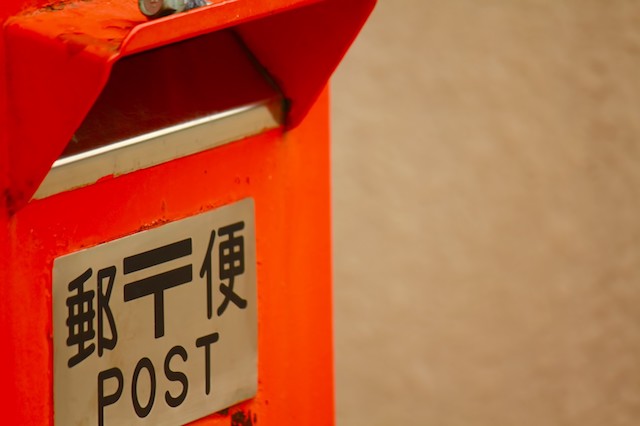
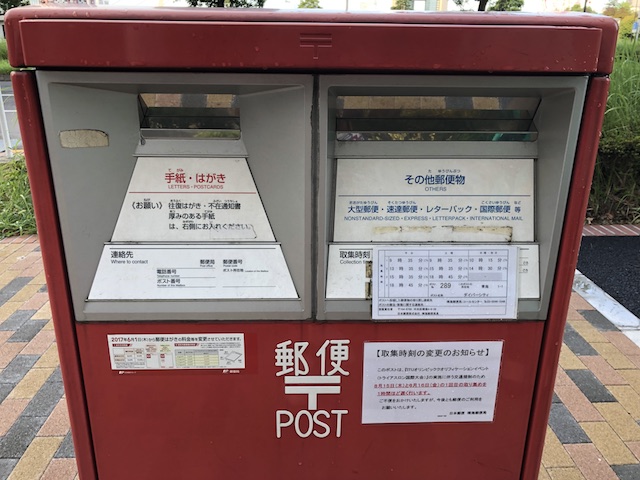
Mailing your postcard or envelope is quite easy. You can opt to either drop your mail into a public mailbox or take it inside the post office directly. If you opt for a mailbox, you will notice that most Japanese mailboxes have different slots indicated for different types of mail. Many mailboxes have English available, but some (such as in the countryside) may not.
Slots indicated for small letters and postcards will be labeled with 手紙・はがき. Larger envelopes may be placed in the larger その他郵便物. If you are not sure of the postage required, it is always better to stop inside the post office and mail your item directly.
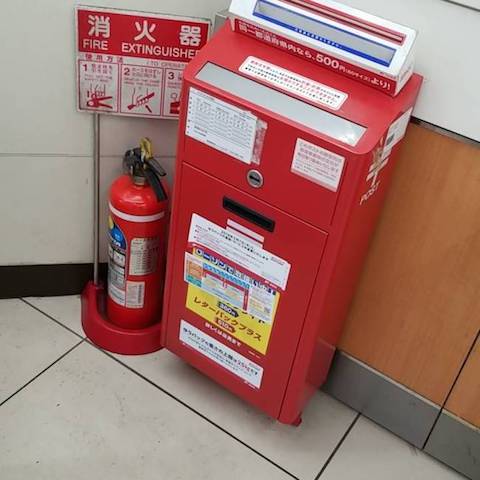
If you cannot find a mailbox nearby, your local Lawson convenience store will have a mailbox located near the front of the store.
Important Times to Send or Not Send Certain Postcards
1. 年賀状(ねんがじょう)Nengajou
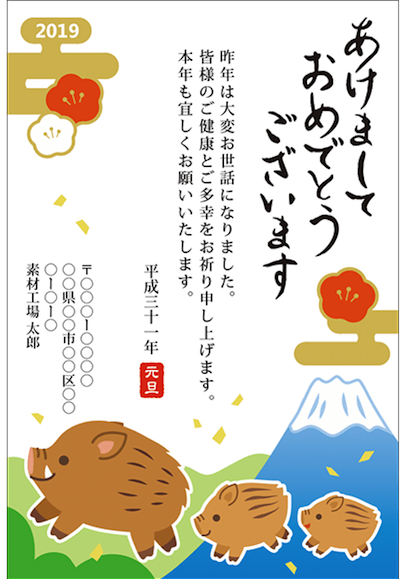
年賀状 are traditional New Year's cards sent to your friends, extended or married family members, and perhaps your coworkers. They are sent as well-wishes and good luck charms to welcome in the new year. It is generally seen as bad taste to not send 年賀状. 年賀状 can be given to your local post office any time in December, and they will be delivered on New Year's Day.
If you receive a 年賀状 from someone you did not send one too, it is customary to send them one back the following year. However, if you receive a 喪中 (number 2 below), it is very important that you do NOT send a 年賀状 to that person or family.
2. 喪中(もちゅう)Mochuu
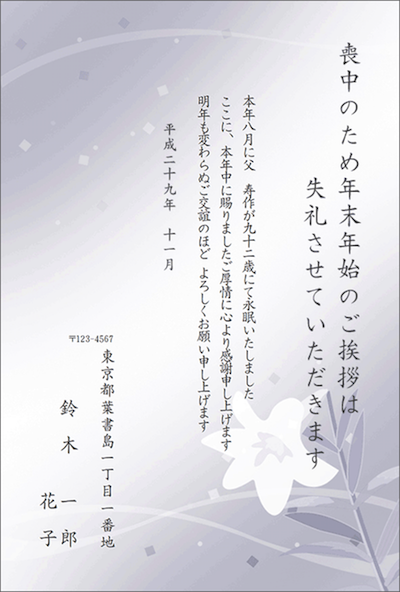
喪中 are grief cards that are sent out to the people you typically receive 年賀状 from. The purpose of these cards is to inform the recipients that there has been a death in the family that year, so there is no need to send 年賀状 that year. It is considered very poor taste to send 年賀状 to a person or family from whom you have received 喪中, so it is important to adhere to this social norm.
If you are to receive one, it will be delivered between mid-November and early December, so you can begin planning your 年賀状 around mid-December.