If you're from the U.S. or other countries whose trash sorting is minimal to nonexistent, living in Japan and suddenly having to sort every single piece of trash can be overwhelming.
In this section we cover the different types of garbage and how they are sorted.
Scroll through to learn about trash/rubbish sorting in Japan.
In Japan, garbage must be separated into a few different categories. The types of bags you are allowed to use and the days the different categories are picked up vary by municipality, so be sure to check the schedule for where you live.
Burnable Garbage
Burnable
Food waste
Burnable garbage includes:
- Raw garbage (food waste)
- Paper waste
- Twigs and branches, plant matter (Please cut long pieces down to about 30 cm in length)
- Clothing (some municipalities collect clothing on designated days)
Non-burnable Garbage
Non-burnable
Batteries/Lights
Non-burnable Garbage includes:
- Metal products from which plastic parts cannot be removed
- Small household appliances less than 30 cm
- Metals & dry batteries
- Light bulbs / fluorescent lights
- Spray cans
- Lighters
- Aerosol cans (Please be sure to exhaust the contents; there is no need to drill holes.)
Cardboard & Other Papers
Cardboard
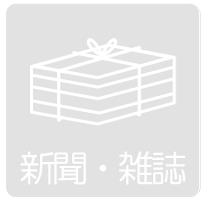
Newspapers / Magazines
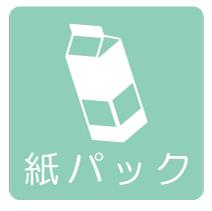
Paper drink cartons
Cardboard, other papers includes:
- Newspapers
- Magazines & miscellaneous paper
- Cardboard
- Paper drink cartons (that have white insides)
※ Please separate these items by type and tie them together with string so that they will not be blown around by the wind. The paper pack is a paper pack of 500 milliliters or more of milk, juice, etc. with a white inside.
Glass Bottles
Glass bottles
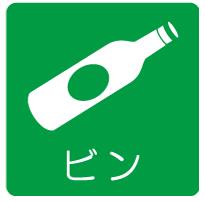
Any glass bottles from drinks or food.
The following items should be categorized as Non-burnable Garbage:
- Broken bottles
- Glass cups
※ Plastic caps should be removed, rinsed with water, and put into Plastic Garbage.
Cans
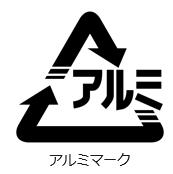
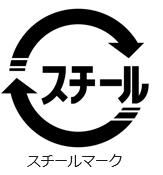
Please rinse the inside lightly with water before disposing of aluminum and steel beverage and food cans.
The following items cannot be thrown out with the cans, and must be put with non-burnable garbage:
- Paint cans
- Spray cans
- Gas canisters
- Cans that cannot be cleaned
Plastic Bottles
Plastic Bottles
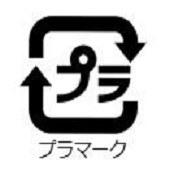
Pura mark
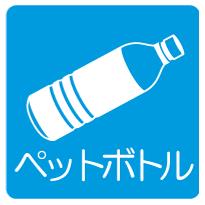
PET mark
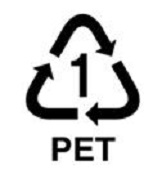
Any plastic bottle marked with the PET symbol.
Please take off caps and labels and gently rinse the insides.
Plastic bottles marked with the "pura" mark should be put in with other plastics.
Plastics
Plastic
Pura mark
The "pura" mark is on plastic containers and bags containing products such as food and clothing.
Please rinse and dry plastics before throwing them away.
Old Clothing
Old clothing
※ Please check your municipality's collection method.
Old clothing (general clothing to wear) — excluding those with vinyl, rubber, and stains.
- Towels / curtains / lace / sheets / blankets
- Handkerchiefs
- Kimono (bands can also be collected)
- Shirts / sweaters
Any clothing you dispose of should be clean and in good condition. Buttons and zippers do not need to be removed.
※ Things that cannot be collected:
- Stained or dirty items
- Futons
- Cushions
- Pillows
- Carpets / rugs
- Mattresses
- Rain ponchos / coats
- Stuffed / plush toys
- Shoes
Large Trash
Furniture, Electrical appliances
Furniture, electrical appliances (excluding electronics such as computers, refrigerators, and air conditioners per the electronics recycling law), bedding, stoves, bicycles, etc. — those with sides of 30 cm or more are considered Bulky Garbage. There is a fee to dispose of these items.
※ Please check with your local city office.
Air conditioners, televisions, refrigerators / freezers, and washing machines are not collected as Bulky Garbage.