110 — Police Emergency
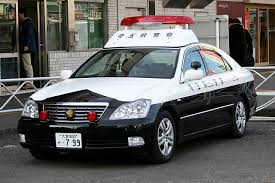
Dialing 110
Dialing 110 will connect you to dispatch, where you can describe your emergency. The appropriate dispatch will be issued.
Please dial in case of the following accidents or emergency situations (requiring police only).
- When you witness fighting or hear screaming.
- When you witness a person who has a weapon, such as a knife.
- When you witness a suspicious person or vehicle.
- When you witness or are a victim of mugging or burglary.
- When you see a fallen person, lost child, etc.
- When you witness or are involved in a traffic accident.
Note: A police officer will ask you what your emergency is, so remain calm and answer as best you can.
English source: http://www.keishicho.metro.tokyo.jp/multilingual/english/index.html
Japanese source: http://www.keishicho.metro.tokyo.jp/index.html
| Japanese | Romaji | English | Pronunciation |
|---|---|---|---|
| 警察 (けいさつ) |
keisatsu | Police | |
| 事件 (じけん) |
jiken | Incident | |
| 事故 (じこ) |
jiko | Accident | |
| けんか | kenka | Fighting | |
| 助けて (たすけて) |
tasukete | Help me |
119 — Fire, Rescue, Ambulance
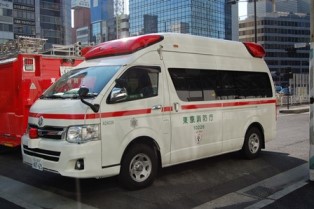
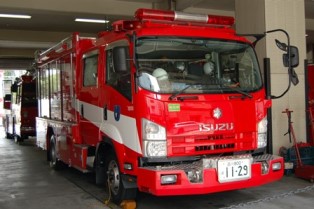

Dialing 119
Fire, rescue, and ambulance all share the same number: 119. When you dial 119, you will be connected to the Disaster Emergency Information Center.
These are some questions you may be asked:
- You will be asked if your call is in response to a fire (火事 かじ kaji) or other emergency (救急 きゅうきゅう kyuukyuu).
- Tell them your location by giving an address or landmark description.
- Explain the incident and the apparent state of any victims.
- Give your name and phone number.
- When you hear the siren, please guide the ambulance as best you can to the area where it is needed.
- Please follow any instructions you are given by paramedics or firemen.
- (For Ambulance Services) When the ambulance arrives, please announce any first aid or CPR you or others have administered, any changes in the victim's condition, the past medical history of the injured or sick (if known), and any other information you think is important. Answer the paramedics' questions as honestly and completely as you can.
Note: Ambulances cannot be used in the following cases.
- Minor, non-life-threatening injuries or illnesses.
- Taxi substitution for going to see a doctor.
- In addition, hospitals will not necessarily see people admitted via ambulance immediately upon arrival at the hospital. How quickly a person will be seen will be determined by the severity of their condition as determined by the paramedics.
Note: Ambulance services themselves are free, but whether an individual hospital charges a fee varies. When arriving by ambulance, if the doctor judges that there was no urgency, a fee of less than ¥10,000 may be charged. This is to discourage people who are not experiencing an emergency from abusing the system. In order to ensure that people in medical emergencies are able to get emergency care, please do not call an ambulance in situations where one is unneeded.
English source: http://www.fdma.go.jp/en/
| Japanese | Romaji | English | Pronunciation |
|---|---|---|---|
| 火事 (かじ) |
kaji | Fire | |
| 救急 (きゅうきゅう) |
kyuukyuu | Emergency | |
| 救急車 (きゅうきゅうしゃ) |
kyuukyuu sha | Ambulance | |
| 住所 (じゅうしょ) |
juusho | Address | |
| 事故 (じこ) |
jiko | Accident | |
| けが | kega | Injury | |
| 電話番号 (でんわばんごう) |
denwa bangou | Phone number | |
| 病院 (びょういん) |
byouin | Hospital | |
| 病気 (びょうき) |
byouki | Sickness / Illness | |
| 熱中症 (ねっちゅうしょう) |
Necchuushou | Heat Stroke |