Birth Control Pills
In Japan, birth control pills and IUDs are available at most gynecologists' offices. You can visit a clinic in person, or use one of the many online telehealth services (オンライン診療) that now offer pill prescriptions — delivered directly to your door. If you plan on using the pill or an IUD purely for contraception, it is not covered by insurance (self-pay). However, certain pills and hormonal IUDs may be covered by insurance if prescribed for a diagnosed gynecological condition — see sections below for details. Unlike other countries, your doctor will not give you a prescription that you refill on your own at the pharmacy every month. After the first visit, you will typically receive one month of medication, and will need a follow-up before your first pack ends. After that, you may receive up to 3 months at a time. Please check with your clinic for current pricing.
IUDs can be used for several years depending on the IUD type, greatly reducing the per-month cost of contraception compared with the pill. Costs vary by IUD type, doctor, and hospital — consult your gynecologist for current pricing. If you decide you want an IUD, see your gynecologist for a consultation first. Insertion is a non-surgical procedure that is typically over in less than 15 minutes.
If you need the pill or a hormonal IUD for health-related issues (endometriosis, dysmenorrhea, menorrhagia, fibroids, etc.), insurance may cover a portion of the cost. However, you will need exams and a diagnosis from a gynecologist deeming it necessary for your condition. Costs vary by clinic — check directly with your doctor for current pricing.
For more options and more knowledgeable doctors, it is recommended you see a gynecologist at a large, reputable hospital for diagnosis and treatment of conditions and diseases of the female reproductive system.
If you have a health issue that requires a birth control pill or hormonal IUD for control, and also want to use it as a contraceptive, you can tell your doctor the reason you want it is for control of your condition (in order to have insurance coverage). The contraceptive effect of the treatment will then be considered a side-effect of your condition/disease treatment. It should be noted, however, that if you become pregnant while using an insurance-covered contraceptive as a condition/disease treatment, you forfeit your right to file a complaint/sue the company for drug/device failure as a contraceptive.
Also, keep in mind that you cannot just say you need it to control a disease or condition in order to receive insurance coverage; you require a diagnosis from a Japanese gynecologist in order to qualify for the coverage.
Dealing with doctors, especially gynecologists, in Japan can be frustrating at times. There are good doctors and bad doctors in every country, though, so don't throw in the towel on a bad egg. As a patient, you are entitled to a second, or even third, opinion. See as many doctors as it takes to find the one that fits, and never feel bad for leaving one behind. Your health is important, and you never have to feel like you're stuck with an arrogant doctor who won't listen to you. There are tons of excellent doctors in Japan, so don't give up if you have trouble at first.
Some alternative contraceptives common in other countries — such as Depo-Provera (injection), contraceptive implants, patches, and NuvaRing — may not be available in Japan. Availability changes over time, so consult a gynecologist to find out what is currently approved. Products found on unofficial online stores should be avoided as their integrity and safety cannot be guaranteed. If you rely on a specific method, confirm availability with a doctor before coming to Japan.
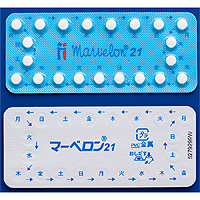
Birth control pills come in two basic types in Japan: monophasic and multiphasic. In a pack of monophasic birth control pills, all pills have the same hormone dose, with the exception of hormone-free reminder pills in 28-packs. In contrast, the pills in a pack of multiphasic birth control have a gradually strengthening hormone dose over the 21-day period (followed by a 7-day period of reminder pills which contain no hormones in 28-packs).
If you are considering switching to a Japanese birth control pill, check the insert on the brand you are currently using to see if the hormones/dosage of the ones available in Japan (listed below) are comparable to what you are on now. If there isn't one, talk to your Japanese gynecologist about your options for replacing your current pill.
Monophasic Oral Contraceptives
Self-pay OC pills are approved only for contraception in Japan — health insurance does not apply.
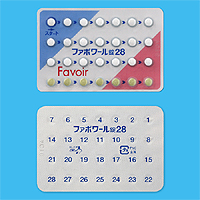
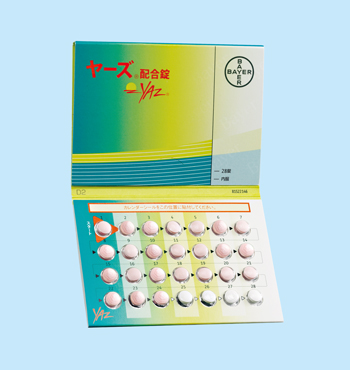

Multiphasic Oral Contraceptives
Self-pay OC pills approved only for contraception — health insurance does not apply.
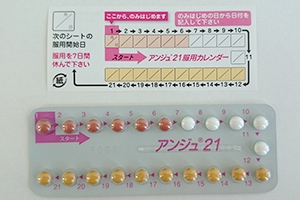
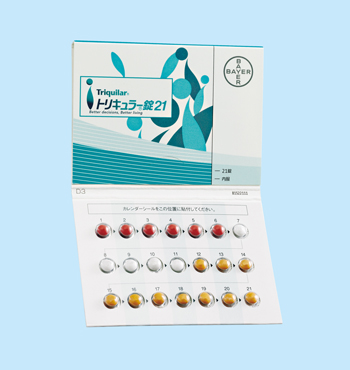


LEP Pills — May Be Covered by Insurance
In Japan, some pills are approved as LEP (Low-dose Estrogen-Progestin) medications for treating gynecological conditions such as dysmenorrhea (severe menstrual pain) and endometriosis. When prescribed for these conditions with an official diagnosis from a Japanese gynecologist, they may be covered by health insurance (approx. 30% cost-sharing). If prescribed for contraception alone, self-pay applies. Your doctor determines which applies based on your situation.
Yaz and its generic Droechi (listed in the Monophasic OC section above) also fall into this LEP category and may be covered by insurance when prescribed for dysmenorrhea.


Progestin-Only Pill (Mini-Pill)
If you have been told you cannot take regular birth control pills, the mini-pill may be an option for you.
+
Progestin
only
no estrogen
No estrogen means it is suitable for smokers, those with high blood pressure, migraines with aura, or a history of blood clots (VTE), as well as women who are breastfeeding. Japan's first progestin-only pill was approved in May 2025. It is approved for contraception and is always self-pay.

Morning-After Pill (Emergency Contraception)
Self-pay Emergency contraception is not covered by health insurance.
⏱ Act within 72 hours — the sooner, the better
「ノルレボ」を
購入したいです。
What to know before you go
- If eligible, you purchase 1 tablet and take it in front of the pharmacist on the spot. You cannot take it home or give it to another person.
- Only the person who will take the pill can buy it. Men cannot purchase it on someone else's behalf.
- No consent from a partner or parent is required. There is no age restriction.
- If you don't meet the eligibility criteria, the pharmacist may decline the sale. In that case, please visit a clinic.
* The pharmacist must have completed specialist training in emergency contraception dispensing.
→ Official Norlevo site — pharmacy locator & English checklist


IUDs
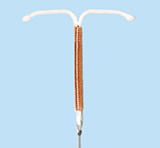
IUDs (Intra-Uterine Devices) are long-term contraceptive devices inserted into the uterus by a gynecologist. Depending on the type, they remain effective for 2 to 5 years. Click any device below to see details.
Non-copper / Non-hormonal

Copper IUDs
Hormonal IUS

Useful Japanese Vocabulary
| Japanese | Romaji | English |
|---|---|---|
| セックス | sekkusu | sex / sexual intercourse |
| 避妊 (ひにん) | hinin | contraception |
| 避妊具 (ひにんぐ) | hiningu | contraceptives |
| 低用量ピル (ていようりょうぴる) | teiyouryou piru | low-dose pill |
| 経口避妊薬 (けいこうひにんやく) | keikouhininyaku | oral contraceptives (OC) |
| 子宮内避妊器具 (しきゅうないひにんきぐ) | shikyuunaihininkigu | IUD (Intrauterine Device) |
| 緊急避妊薬 (きんきゅうひにんやく) | kinkyuuhininyaku | emergency contraceptive |
| アフターピル | afutaa piru | morning-after pill (colloquial) |
| 要指導医薬品 (ようしどういやくひん) | youshidou iyakuhin | pharmacist-guided OTC medicine |
| 婦人科 (ふじんか) | fujinka | gynecology / gynecology clinic |
| 産婦人科 (さんふじんか) | sanfujinka | obstetrics & gynecology (OB/GYN) |
| 処方箋 (しょほうせん) | shohousen | prescription |
| 薬局 (やっきょく) | yakkyoku | pharmacy |
| 保険適用 (ほけんてきよう) | hoken tekiyou | covered by insurance |
| 自費 (じひ) | jihi | self-pay / out-of-pocket |
| オンライン診療 (おんらいんしんりょう) | onrain shinryou | online telehealth consultation |
| 副作用 (ふくさよう) | fukusayou | side effects |
| ミニピル | mini piru | mini-pill / progestin-only pill |
| プロゲスチン | purogesutin | progestin (synthetic progesterone) |
| エストロゲン | esutorogen | estrogen |
| 膣 (ちつ) | chitsu | vagina |
| 子宮 (しきゅう) | shikyuu | uterus |
| 子宮頸部 (しきゅうけいぶ) | Shikyuukeibu | cervix |
| 卵管 (らんかん) | rankan | Fallopian tubes |
| 卵巣 (らんそう) | ransou | ovaries |
| 排卵 (はいらん) | hairan | ovulation |
| 卵子 (らんし) | ranshi | egg / ovum |
| 生理 (せいり) | seiri | period / menstrual cycle |
| 生理痛 (せいりつう) | seiritsuu | menstrual pain / cramps |
| 出血 (しゅっけつ) | shukketu | bleeding / menstrual flow |
| 子宮内膜症 (しきゅうないまくしょう) | shikyuunaimakushou | endometriosis |
| 子宮筋腫 (しきゅうきんしゅ) | shikyuukinshu | uterine fibroids |
| 子宮内膜ポリープ (しきゅうないまくぽりーぷ) | shikyuunaimakuporiipu | uterine polyps |
| 多嚢胞性卵巣症候群 (たのうほうせいらんそうしょうこうぐん) | tanouhouseiransoushoukougun | Polycystic Ovary Syndrome (PCOS) |
| 月経困難症 (げっけいこんなんしょう) | gekkeikonnanshou | dysmenorrhea |
| 月経過多 (げっけいかた) | gekkeikata | menorrhagia |