Living through the seasons in Japan can be miserable, particularly in the winter and summer. The biggest complaint from foreign residents is that winter is too cold and summer is unbearably hot.
So how do you deal with the temperature extremes in an apartment with paper-thin walls and seemingly no insulation?
Look through this section to learn more about the most popular ways to stay warm during the winter and cool during the summer in Japan.
Heating
1. Heating and AC in Japan
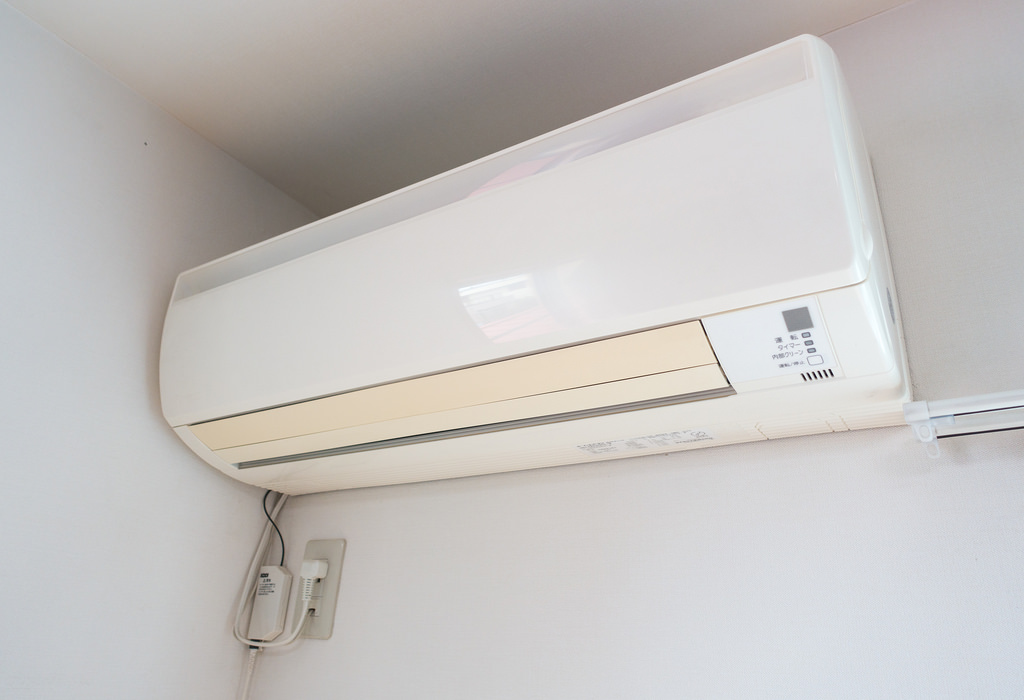
Central heating is very rare in Japan. Most homes and apartments are equipped with combination heating/cooling/dehumidifying units like the one in the image. It is not uncommon for a house or even apartment to have more than one unit, as a single unit is designed to heat/cool/dehumidify one room.
These combination units have two parts: the main unit outside (balcony, yard, or roof) that does the work, and the dispensing unit inside that controls the air flow. Typically, when there is more than one unit inside a house or apartment, there is also more than one unit outside.
Modern combination units have a variety of functions including air filtration, automatic cleaning, and dehumidification, but older units typically only have heating and cooling functionality.
Japanese source: http://panasonic.jp/aircon/
2. Kerosene Heater
Kerosene heaters are commonly used in the winter to save on electricity costs. You can get kerosene at a gas station or from kerosene delivery trucks in some areas.
If you live in an apartment or otherwise rent your residence, you should check your lease or renter's agreement for conditions on kerosene heaters. These heaters are often not allowed in rental properties as they pose a potential fire threat. If your lease allows you to use a kerosene heater, be sure to have proper ventilation in your apartment or house and keep the area around your heater free of any items or debris.
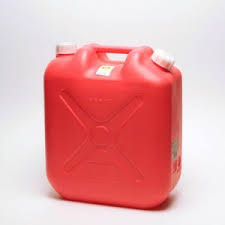
Kerosene can be stored in this type of plastic gas can.
Japanese source: https://www.corona.co.jp/heating/fanheater/
3. Electric Heater
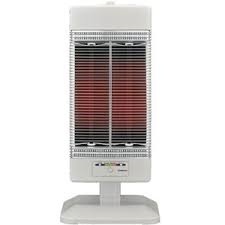
Electric space heaters are a great alternative to kerosene heaters, and are typically allowed in rental properties as they do not use gas. They are quiet and heat up quickly, but be careful about what is around the heater, as cloth or other flammable items that come into contact with the heating elements could catch fire. Generally, leave a wide space around all sides of any space heater, electric or gas, to reduce the risk of fire.
Japanese source: https://www.corona.co.jp/heating/
4. Electric Blanket
Washing in the washing machine is possible.
- Body size: vertical 140 × horizontal 80 cm (Regular size YMS-13)
- Body size: vertical 188 × horizontal 130 cm (Large size YMK-21)
- Main body weight: 0.7 kg
- Material: 100% polyester
- Power consumption: 55 W
- Electric charge estimate (per hour): weak ≈ 0.09 yen, medium ≈ 0.49 yen, strong ≈ 0.83 yen (calculated at 27 yen per 1 kW/h)
- Surface temperature: weak ≈ 20°C, medium ≈ 36°C, strong ≈ 52°C
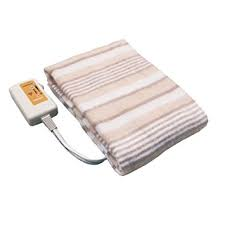
When using an electric blanket, place it between two blankets for best results. Do not lay the electric blanket directly over yourself as there is a risk for low-temperature burns while you sleep. There should always be a buffer blanket between you and the electric blanket. Avoid creasing the heating elements that run throughout the blanket to maintain its safety and effectiveness.
Japanese source: http://www.yamazen.co.jp/japanese/business/amenitytop/home/
5. Yutanpo – Hot Water Bottle
When using a hot water bottle, be sure to wrap it with a special cover or thick cloth to avoid touching the skin directly. Also, to prevent low-temperature burns, be careful not to have prolonged physical contact with the hot water bottle.
Low-temperature burns occur when the same part of the skin is in contact with a warm object for a long time. Even if it feels comfortable, the heat will extend to the deep part of the skin. The temperature of the skin in contact with hot objects and the time it takes to get burned are approximately as follows:
- 3 to 4 hours at 44°C
- 30 minutes to 1 hour at 46°C
- 2 to 3 minutes at 50°C
Should you experience low-temperature burns, seek medical attention.
Japanese source: http://www.tange-kagaku.co.jp/tatsu_yutanpo_standard.html
6. Microwavable Yutapon
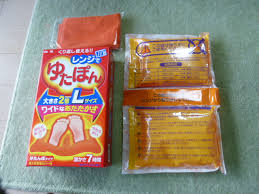
Microwavable Yutapon is a microwavable gel heating pad made for cold feet. Fold the pad in half and microwave for 3 minutes. When done, open the pad and fold it back in half the other way so that the part that was inside before is now outside. Microwave for 3 more minutes. When done, take it out of the microwave and insert it into its protective cover. You can now put it at the end of your bed to keep your feet warm.
Japanese source: http://www.hakugen-earth.co.jp/products/warmer/yutapon/item_0063.html
7. Kotatsu
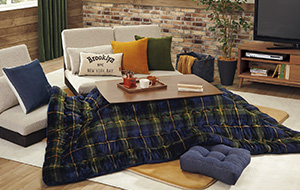
Kotatsu, or heated tables, are very commonly used in Japan in winter. These tables have a heating element on the underside, and a removable top under which a large kotatsu blanket can be placed.
Kotatsu can be very warm and relaxing, but it is important not to fall asleep under one so as not to get burned.
Japanese source: https://www.nitori-net.jp/ec/
8. Hokkairo (Disposable Warmer)
Regular

Sticky type

Hokkairo is a disposable warmer that utilizes the oxidizing action of iron powder. Each warmer contains iron powder that oxidizes when removed from its airtight package and generates heat.
They come in many different varieties, from sticky ones to stick in between clothing layers, to large and mini size to put in your pockets, to small sticky kinds to put on your socks.
- Regular: Duration about 20 hours
- Sticky type: Duration about 12 hours
Japanese source (Regular type): http://hc.kowa.co.jp/regular
Japanese source (Sticky type): http://hc.kowa.co.jp/sticky
Cooling
1. Fans
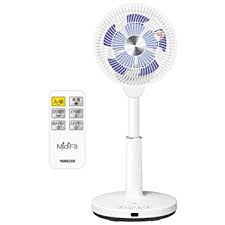
While many people use the cooling function of their combination heating/cooling units in the summer, to save resources and money, many people opt for fans instead. They can be purchased at any home goods store, electronics store, or on Amazon.
Modern fans often come with a variety of functions as well, including a high range of wind strengths, oscillation, timer, and remote control.
Japanese source: http://www.yamazen.co.jp
2. Cooling Bed Cover
Bedsheets
Blankets
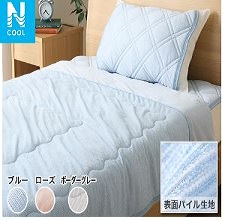
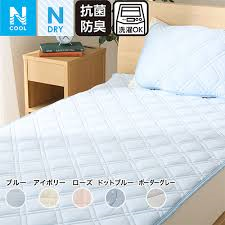
Bedsheets: Machine washable, antimicrobial, cooling mattress pads are very useful in the hot summer. They dry very fast when wet from sweat or washing, and the material helps keep you cool while you sleep. Cooling pillow pads are also available.
Blankets: These light, cooling blankets are another great product for summertime sleeping. One side is the smooth, cooling material (great for hot, muggy nights), and the other side is fluffy and slightly warmer (for those nights that aren't so humid). These blankets are machine washable and dry very quickly.
Japanese source: https://www.nitori-net.jp/ec/
The following products are often used by working people, students, and athletes to stave off sweat and body odor in the hot, humid Japanese summers.
3. Facial & Body Paper Sheets
Facial Paper sheets
Body Paper sheets
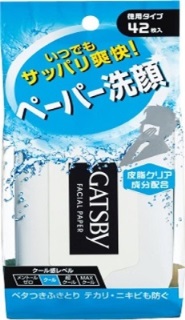
Facial Paper Sheets: These cooling sheets will remove oil, sweat, and dirt, and leave your skin clean with a light, smooth powdery layer to make your skin feel good. The 100% cotton sheets can be used even behind your ears and on your neck to refresh yourself.
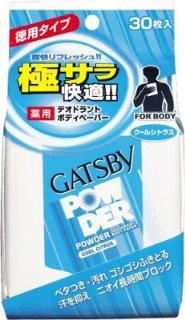
Body Paper Sheets: Deodorant body paper sheets help you cool off and feel clean on hot, sweaty days. The sheets absorb sweat and oil and leave behind a cool minty feeling, and a deodorizing powder to keep you fresh.
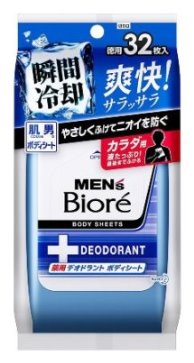
4. Men's Cooling Body Care Sheets
Facial Paper sheets
Body Paper sheets
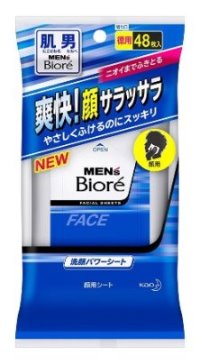
Facial Paper Sheets: These 100% cotton sheets can be used on your face and neck to absorb oil and sweat. They also contain menthol to help you feel cool and refreshed.
Body Paper Sheets: Men's deodorant body sheets help you control sweat, oil, and odor on your body during the summertime. They contain menthol to help you feel cool and comfortable, and a fresh scent to help with odor.
How to Use the Air Conditioner
Overview
Depending on where you're from, Japan's combination heating and cooling units are either totally familiar or uncharted territory. Here we'll walk you through the basic functions, using the remote control, and basic maintenance.
If you live in Japan, chances are your air conditioning/heating unit looks something like this, and comes with a remote control that is borderline impossible to figure out. First we'll take you through some basic maintenance for your unit, and then we'll get into the remote, giving you helpful vocabulary along the way.
- Unit Maintenance
- Basic Functions of Combination Air Conditioning/Heating Units
- Your Unit's Remote Control
1. Unit Maintenance
The most basic maintenance you can do for your air conditioning unit is to clean the filters. Most A/C units will have washable filters that you can take out and clean yourself. The following are helpful tips to clean your unit's filters.
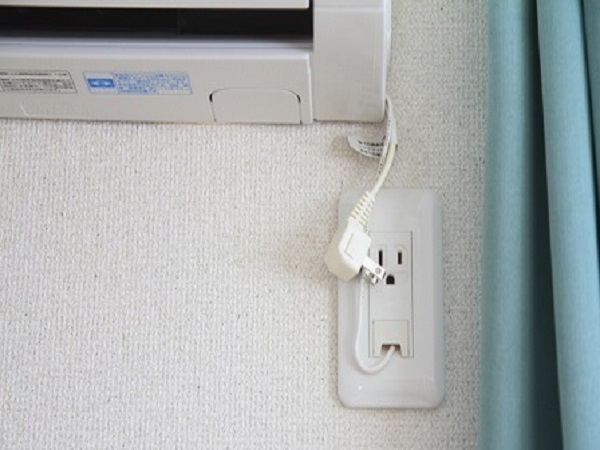 |
Unplug the unit
Before doing anything with your air conditioning unit, turn it off and unplug it from the wall. This will ensure that you will be safe from electric shocks. |
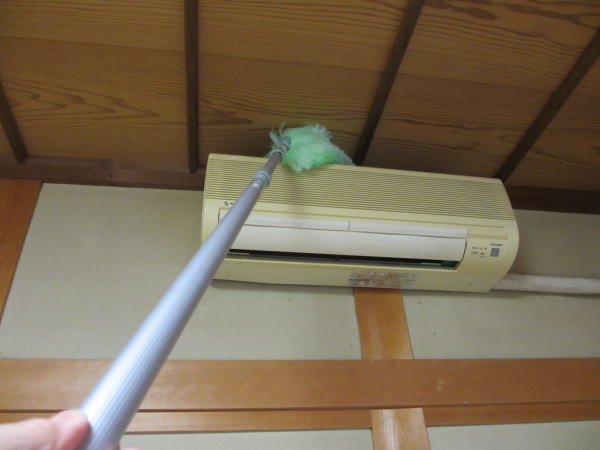 |
Dust the outside
To keep dust dispersal at a minimum, wipe down the exterior of the unit with a damp cloth before proceeding to the next step. Be sure to get the top, as this is where most dust will accumulate. |
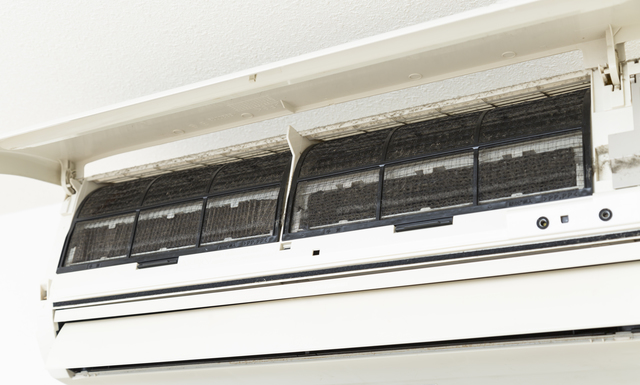 |
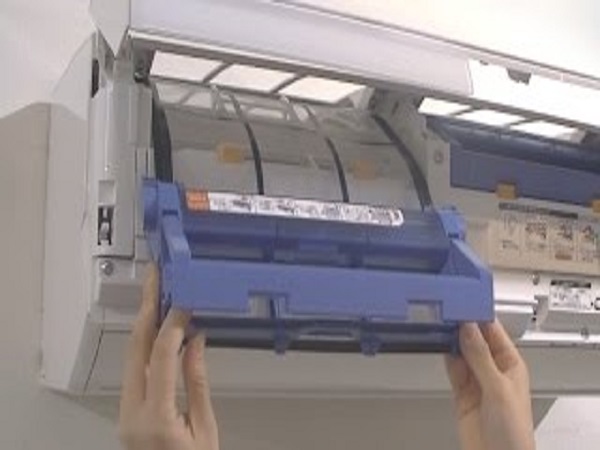
Open the unit cover
Your unit may open from the bottom like this one, or from the top. It will vary with each unit. |
 |
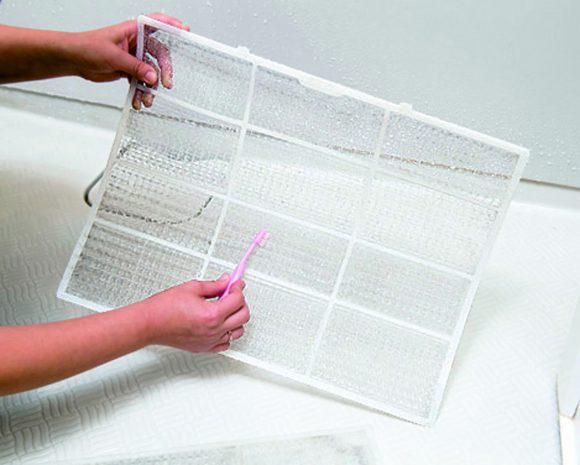
Pull out the filter(s)
If your unit has more than one filter, they may be sized for the particular side they're on. Keep in mind which one goes where. An easy trick is to always keep them together in order: Left on left, right on right. |
 |
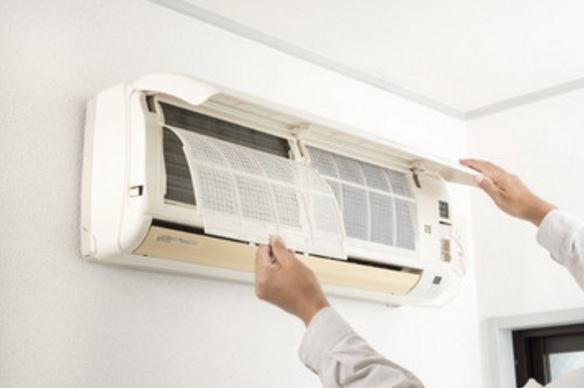
Clean the filters
While most filters are washable, some are not. If you're not sure, check the manual that came with your unit. If you don't have a manual or cannot read enough of it to find out about washing, stick to vacuuming your filters.
If your filters are washable, vacuum the excess dust off of them, and then wash them gently in warm, soapy water. When clean, rinse thoroughly and set out to dry.
Do not put your filters back in your unit unless they are 100% dry. Wet filters can promote mold growth inside the unit and may potentially cause electrical problems. |
 |
Reinsert filters
Once your filters are completely dry, reinsert them into their tracks. Make sure they are secure. Close the unit back up, plug it back in, and you're done! |
2. Basic Functions of Combination Air Conditioning/Heating Units
These days newer units have an incredible number of functions, though every unit will have basic heating and cooling. Here are some other functions yours may have:
- Auto — Depending on your unit, it may also have an automatic setting, which keeps the ambient air temperature to whatever degree level you set by using a combination of heating and cooling.
- Dry — Your unit may also have a dehumidifying function, which is great for those rainy days when you have to dry your clothes inside.
- Air Cleaning — Some newer units may also have an air-cleaning function, which is useful during seasons where circulation of fresh air from outside is rare. This function cleans and refreshes the air inside by pumping it out, through filters, and back in.
The best way to find out what functions your unit has is to simply look at the remote.
3. Your Unit's Remote Control
Though every remote and its layout will differ, most will have the same basic options and similar vocabulary. Let's take a look at a picture.
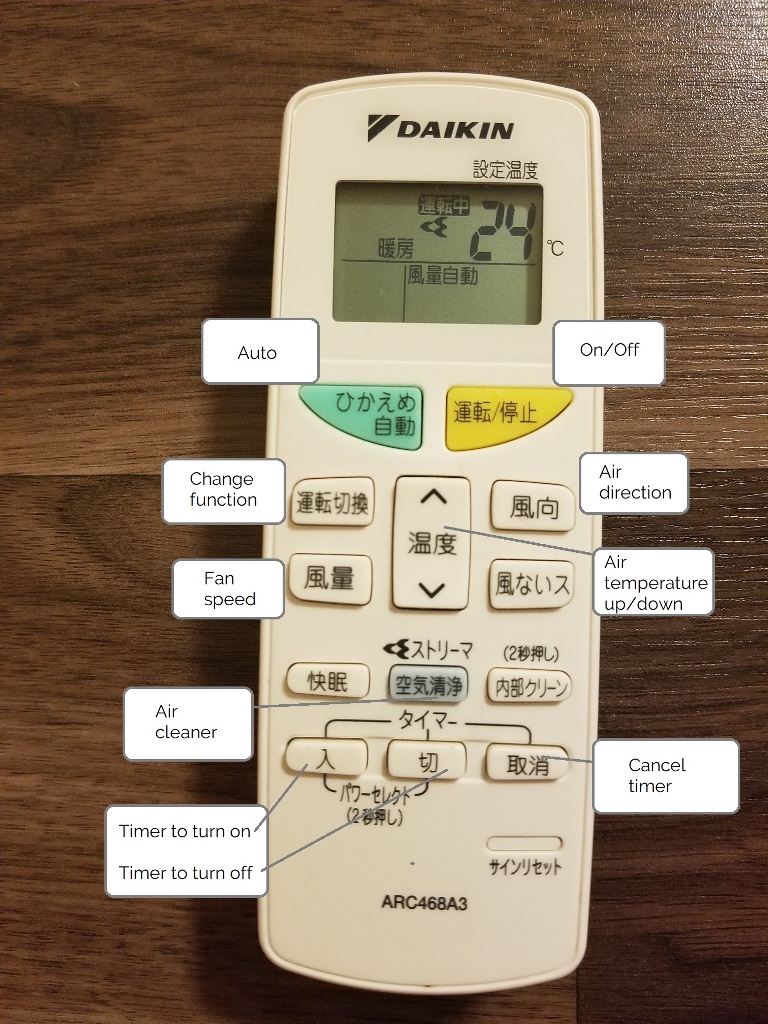
Changing the mode
To switch between modes/functions, simply push the 運転切替 button until the desired mode is on screen. Here are some common modes:
| Japanese | Romaji | Function |
|---|
暖房
だんぼう | danbou | Heat |
冷房
れいぼう | reibou | A/C (cooling) |
| ドライ | dorai | Dehumidify |
| 空清 | n/a | Air cleaning |
Fan speed and air direction
Depending on your remote, you may have different symbols and characters for the fan speed. Most remotes require you to press the 風量 button until the desired speed is reached.
For air direction, the fins on your unit may automatically oscillate or be automatically stationary. If your remote has a 風向 button, this means that you can adjust the direction the fins blow in. When you press this button, the fins will switch between oscillation and being still. To change the fin direction, press the button to turn on oscillation, and simply press the button again when the fins get to the desired position. Alternatively, you can leave oscillation on.
| Japanese | Romaji | Function |
|---|
風量自動
ふうりょうじどう | fuuryou jidou | Automatic speed (self-adjusts depending on ambient temp) |
| しずか | shizuka | Quiet mode (runs desired temperature at a low, quiet speed) |
| 弱 | jaku | Low |
| 強 | kyou | High |
風向
ふうこう(かざむき) | fuukou (kazamuki) | Air direction/oscillation |
Using the timer
The timer on your remote is used to either set when the unit will turn on or when it will turn off. To set when it will turn on, press the 入 button as many times as you need to get the number of hours you want to pass before your unit turns itself on.
For example, if you want your heater to turn on one hour before you get home so your house is nice and warm when you arrive, calculate how many hours it is until you want it to turn on. If it is 9 hours, press the 入 button until the number on the display is 9. Your heater will then turn on 9 hours from the last button press.
Similarly, to set when the unit turns itself off, press the 切 button until the desired number of hours is displayed. Once the job is complete, the timer is no longer active. You will have to set it each time you wish to use it. To erase or cancel a set timer, press the 取消 button.
Here are some useful vocabulary words to help you demystify your remote:
| Japanese | Romaji | Function |
|---|
運転・停止
うんてん・ていし | unten / teishi | Start/Stop (on/off) |
自動
じどう | jidou | Automatic mode |
運転切替
うんてんきりかえ | unten kirikae | Change mode (heating, cooling, dry, etc.) |
風量
ふうりょう | fuuryou | Fan speed (how fast the air comes out) |
温度
おんど | ondo | Temperature |
風向
ふうこう(かざむき) | fuukou (kazamuki) | Air direction/oscillation |
空気清浄
くうきせいじょう | kuukiseijou | Air cleaner |
| タイマー | taimaa | Timer |
入・切
いり・きり | iri / kiri | On/Off |
取消
とりけし | torikeshi | Unset/remove setting |