1. Bugs eat clothes all year long?
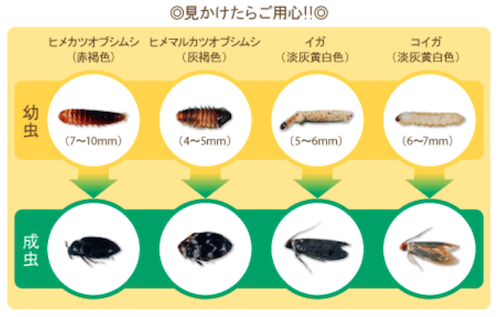
Insects eat clothing during their larval season. Among these pests are Katsuo Shimushi and Himemaru Katsuo Shimushi, which lay eggs once a year, and spend approximately nine months as larvae.
In addition, Iga and Koiga, fellow members of the silkworm family, lay eggs three times a year, and about two thirds of their lives are spent in the larval stage. However, the length changes depending on the time of birth, and it could be two to five months.
Insects become active in the warm season, when the temperature is 15 degrees (Celsius) or more. However, the activity slows down when the temperature is over 35 degrees, and they die when it gets close to 40 degrees. They also die in the cold winter months. However, if the temperature of the room is kept constant via air conditioning or heating, it creates a comfortable environment for insects all year round, during which time they will continue to lay eggs.
2. What is the best timing to avoid bugs?
Many people in Japan rotate their clothing in spring and fall. It is best, if possible, to select a time where it is unlikely that larvae are present, though in reality this is quite difficult. Therefore, it is important to create an environment that keeps insects away at all times. Since food spills, sweat, and oil stains on clothes become food for insects, it is essential that you wash and dry your clothes thoroughly before putting them away or storing them for the season.
In addition, since clothing pests may be attached to clothes that have been dried outdoors, carefully brush them before hanging or folding them to remove insects and eggs on the surface of the fabric. In addition, putting insect repellent in your drawers and closets will further reduce the possibility of damage from insects.
There are various types of insect repellents depending on the size of the storage space, so use the one that suits your home.
3. What is 防虫剤 like in Japan?
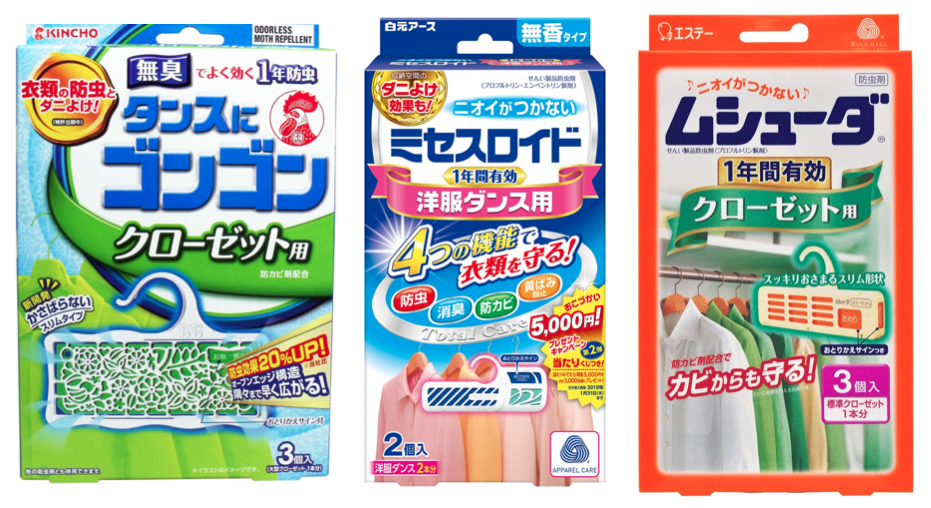
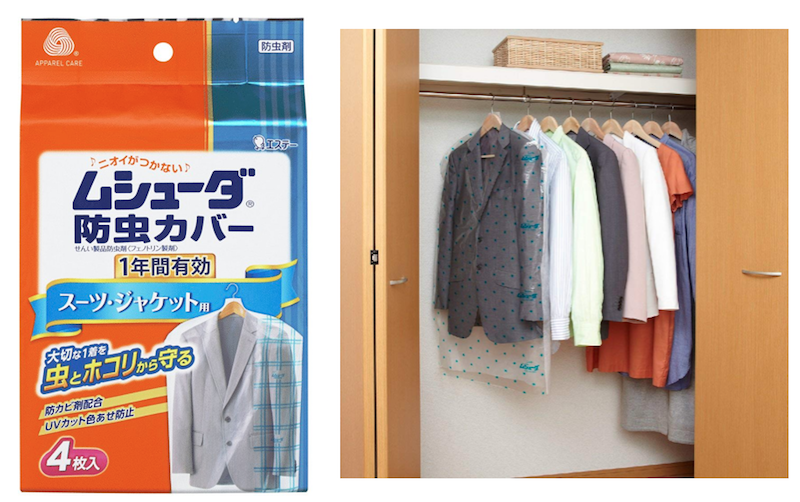
There are basically three types: Small ones that go in drawers, hanging ones to put in your closet, and protective sheets to cover jackets and other expensive items. Most of these products also have deodorizing and mold-preventing properties.
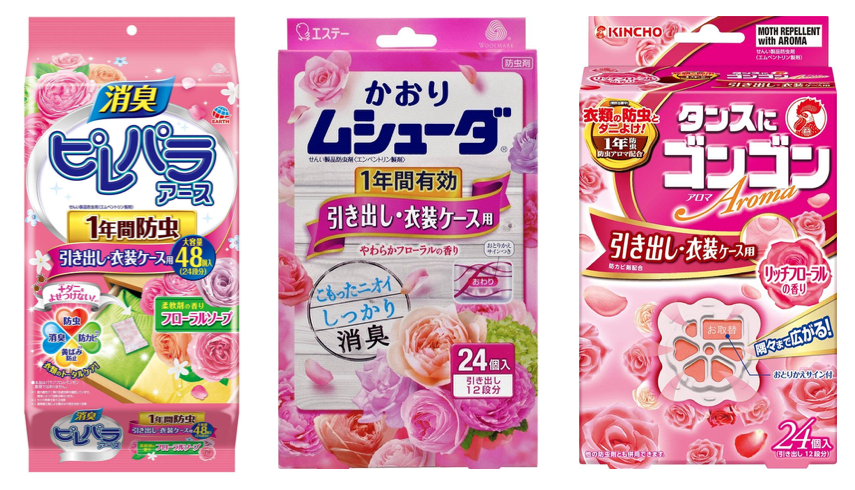
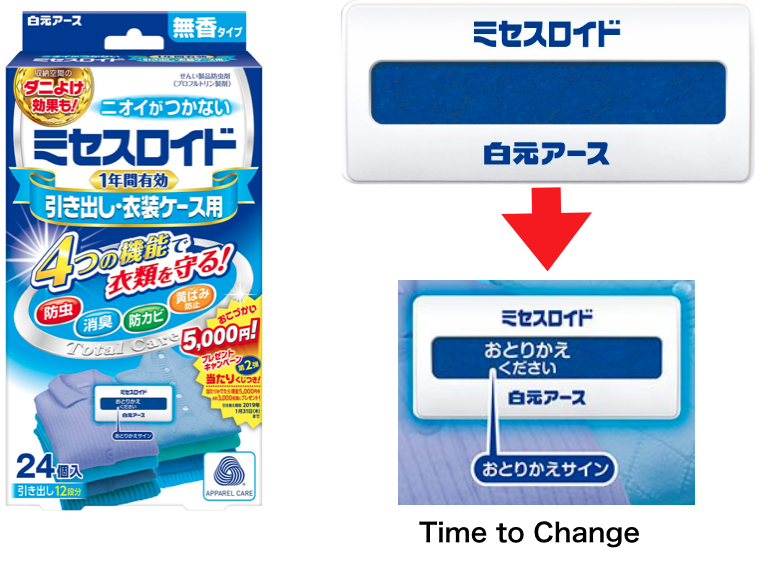
Some are unscented while others also act like drawer sachets and leave a refreshing scent inside your drawer. These can be useful if you have wooden drawers that leave your clothes smelling of wood.
When using the drawer type, 1 packet per small drawer is adequate. If you have large drawers, 2~4 packets are recommended.
Scented
For closet
Jacket cover type
When it is time to change them, the packet will indicate as follows:
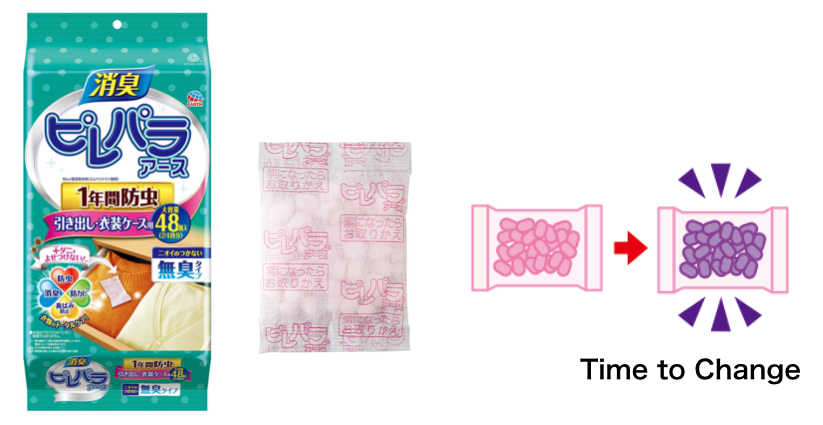
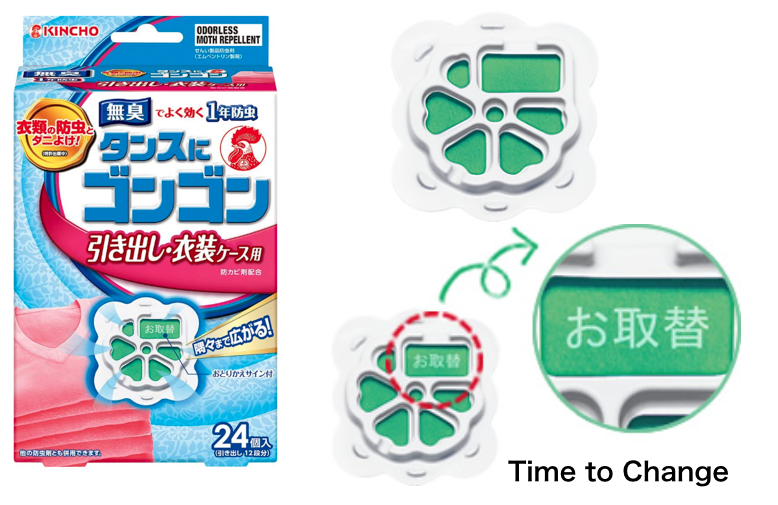
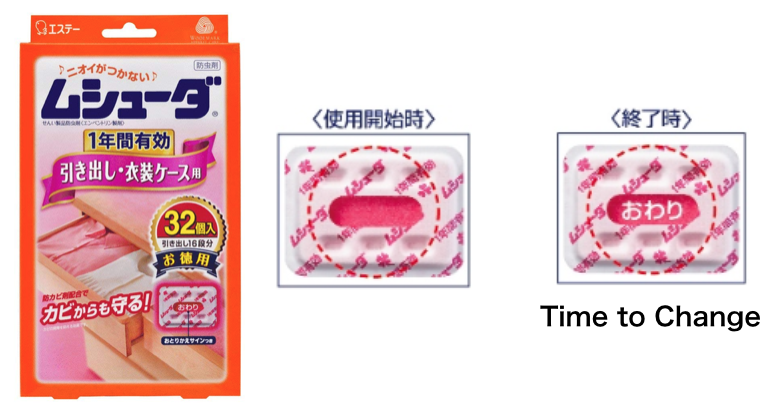
For a more detailed look at how to use these repellents, watch this short video below:
Here are some general handling precautions for all such products:
- Keep out of reach of children.
- When replacing clothes, ventilate the room properly.
- Please follow the usage instructions on the package.
- Please use in a closed storage space.
- Do not eat this product. If ingested, contact your doctor immediately and inform them that a pyrethroid repellent has been ingested.
- Do not use for any purpose other than specified.
【Preservation method】
Seal and store in a cool place out of direct sunlight.
4. Where can you buy?
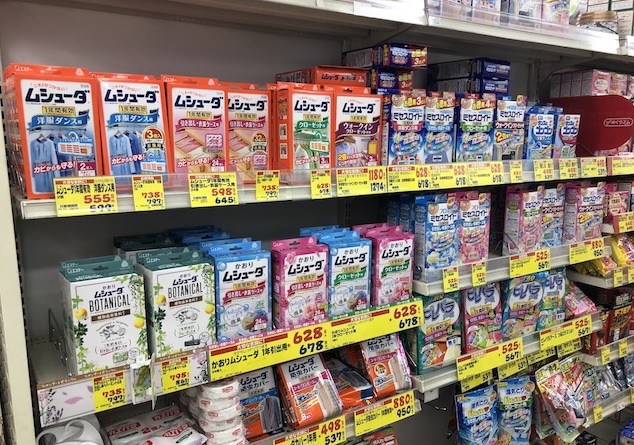
These products are available at any drug store or home center. They may also be available at some grocery stores.
Here is some useful vocabulary to help you navigate repellents.
| Japanese | Romaji | English |
|---|---|---|
| 1年間(いちねんかん) | ichinenkan | One year |
| 有効 (ゆうこう) | yuukou | valid/active |
| 防虫剤(ぼうちゅうざい) | bouchuuzai | Insect repellent |
| 衣類(いるい) | irui | clothing |
| 引き出し(ひきだし) | hikidashi | drawer(s) |
| カビ(かび) | kabi | mold |
| 防カビ(ぼうかび) | boukabi | Mold preventative |
| 虫(むし) | mushi | bugs/insects |
| ニオイがつかない | Nioi ga tsukanai | Does not leave a smell behind |
| おわり | owari | End/over |
| 無臭(むしゅう) | mushuu | unscented |
| 消臭(しょうしゅう) | shoushuu | deodorizer |
| 香り(かおり) | kaori | scent |
| 柔軟剤(じゅうなんざい) | juunanzai | Fabric softener |
| 黄ばみ(きばみ) | kibami | yellowing |
| 防止(ぼうし) | boushi | prevention/preventative |